Data architecture
Conceptual modeling in Dataphin is a feature for building business models directly on the platform. This lets you quickly implement your business knowledge in the data mid-end and achieve integrated modeling and data warehousing. It also helps data consumers better understand the data and its business context. This topic introduces the basic concepts of conceptual models in a Dataphin data warehouse plan, including subject areas and Entity Relationship Diagrams. This information helps you better understand and use Dataphin for data warehouse planning.
Background information
When you build a data mid-end, the first step is to analyze your business. This involves identifying the people, objects, and basic rules of the business. You then clarify the relationships and interactions between them. After you understand the business architecture and operations, you can create a conceptual model. This model abstracts the real-world business and uses methods, such as visualization, to accurately represent its operations.
Function overview
Multi-level subject areas: You can create multiple levels of subject areas and display them in a tree diagram.
Entity relationship definition: You can define entity relationships when you define business entities. Dataphin supports various relationship types, such as association, inheritance, hierarchy, sequence, flow, and inclusion, to accurately model business connections.
Entity Relationship Diagram: Allows you to visually configure object relationships and definitions from your business scenarios to build a conceptual model. The model is displayed as an entity relationship flowchart.
Logical table creation: Allows you to quickly create logical tables from existing business entities. This links the conceptual and logical model creation processes.
Retail industry conceptual model example
Subject area model
Before you create a conceptual model, you must first create the corresponding subject areas. The following image shows a subject area model for the retail industry created in Dataphin:

The three fundamental entities in the retail industry are people, products, and places. From these, you can derive the three core business object entities: customers (consumers), products, and channels, such as physical outlets or online channels. All other business entities revolve around these core entities, which lets you identify many other business entities.
In the retail industry, the core business activity entity is sales, which involves selling products to consumers through various sales channels. The sales business activity entity associates the customer, product, and channel business object entities.
Business entities in the marketing domain, such as marketing campaigns and coupons, help acquire customers and expand the customer base. The content domain provides resources, such as content entities, to increase customer stickiness.
Business entities in the supply chain domain, such as suppliers, procurement, transportation, and warehousing, ensure the supply of products.
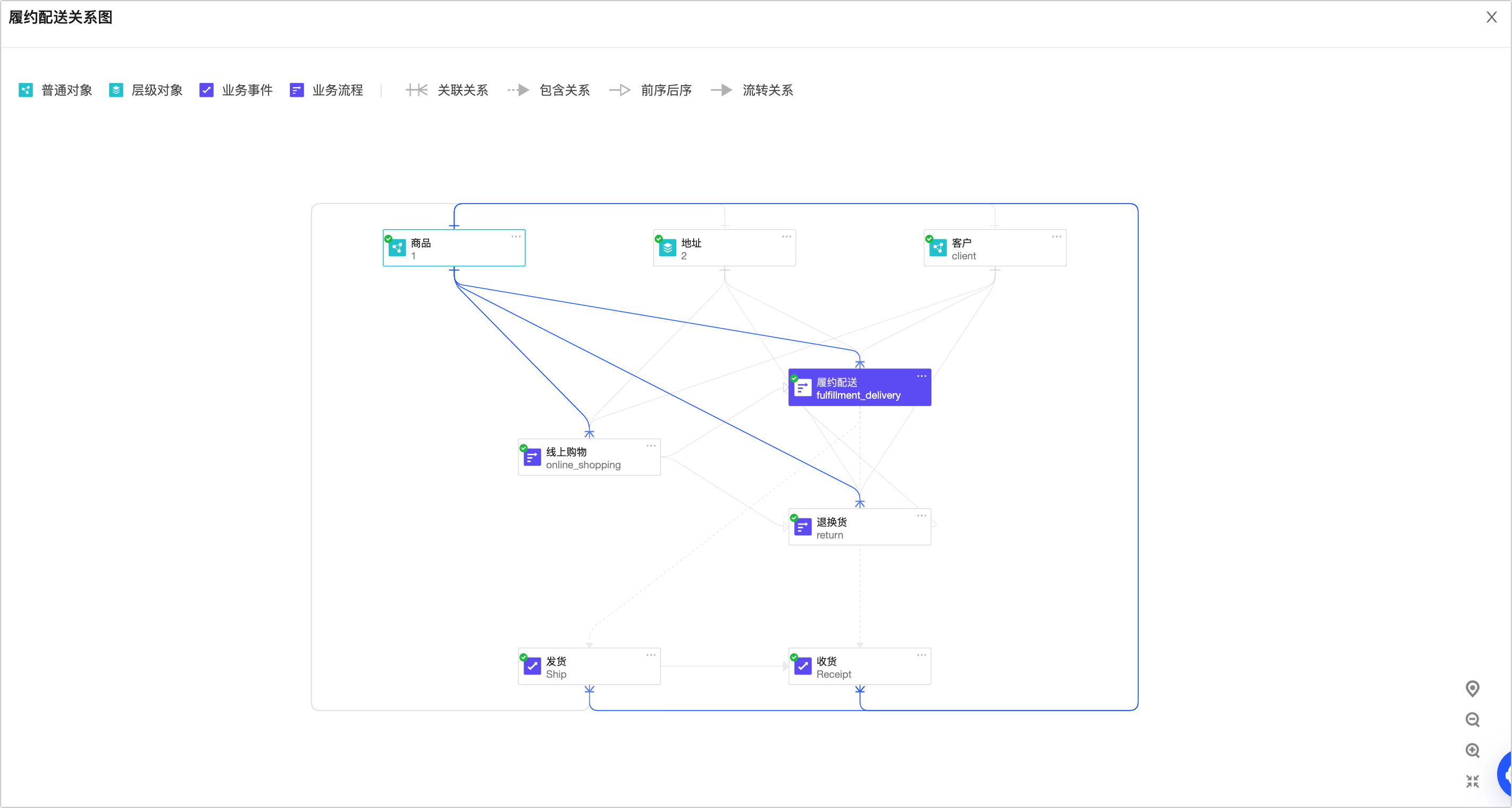
Business entities in the fulfillment domain deliver products to customers.
Conceptual model
A conceptual model is built based on the subject area model and models the entities within each subject area and the relationships between them. The following image shows an example of a conceptual model for the fulfillment domain: