Typical cases of preference tags
In personalized marketing scenarios, understanding customer behavior is crucial for retailers to accurately predict customer needs, optimize inventory, devise marketing strategies, and provide personalized shopping experiences. This topic examines the processing of behavioral preference tags using behavioral relational data from member order products.
Behavioral relationship
In this scenario, the behavioral relationship of member order products is the connection established by the behavioral entity member through ordering behavior with the behavioral object product.
The specific attributes included are as follows (partial examples):
Parameter | Entity-Entity ID | Property |
Entity | Member-Member ID | Member name, phone number. |
Behavior | - | Order time (behavior time), order amount. |
Object | Product-Product ID | Product name, product type. |
Tag processing cases
Top 3 products frequently purchased by members in the last 30 days
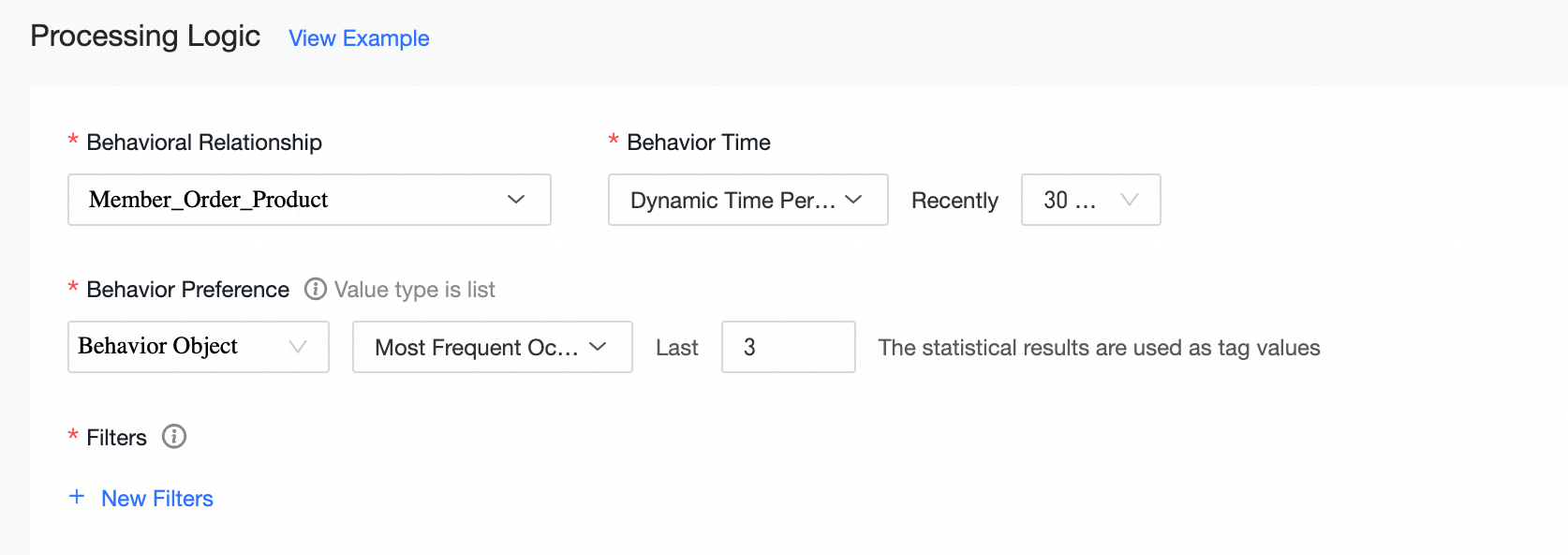
This case tag can be processed directly through the attributes of the behavioral relationship, using the most frequently appearing product name (behavioral object attribute) as the tag value. The processing logic is as follows:
Processing logic
Count the occurrences of product names in the behavioral data from the last 30 days, sort the counts, and select the top 3 as the tag values.
Configuration properties
Property | Property Value |
Behavioral Relationship | Member_Order_Product. |
Tag Source | Behavior object attribute: Product name. |
Statistical Object | Behavior object attribute: Product name. |
Statistical Method | Most frequent (default descending order). |
Statistical Range | Last 30 days. |
Value Policy | Top 3 values. |
Page configuration example
Top 10% product names by order amount in the last 30 days
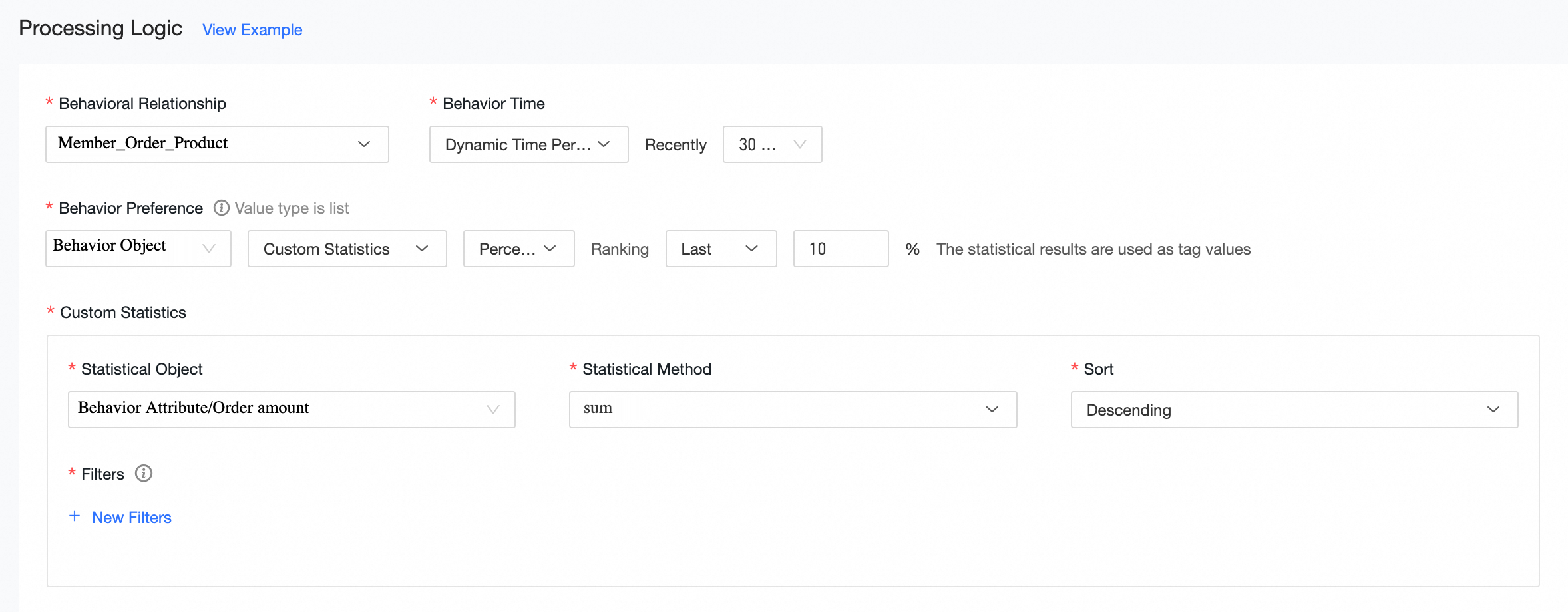
This case tag involves using an attribute of the behavioral relationship as the statistical object and another attribute as the tag value based on the statistical results. Specifically, it entails counting the order amount (behavior attribute) and returning the top 10% product names (behavioral object attribute) based on the sum of order amounts. The processing logic is detailed below:
Processing logic
Group and sum the order amount attribute in the behavioral data from the last 30 days by product name, sort in descending order, and select the top 10% as the tag values.
Configuration properties
Property | Property Value |
Behavior Relationship | Member_Order_Product. |
Tag Source | Behavior Object Attribute: Product name. |
Statistical Object | Behavior Attribute: Order amount. |
Statistical Method | Custom statistics: Sum and then descending order. |
Statistical Range | Last 30 days. |
Value Policy | Top 10% by percentage. |
Page Configuration Example