Requirement phase
Data warehouses can be used to discover and define the information used in enterprise decision-making. Changes in the strategic direction of the enterprise and business views toward the industry can result in variable data warehouse requirements. The data warehouse requirements are diverse and may iterate.
A data product manager is the person who receives the requirements from the business side. In the requirement phase, the data product manager needs to create standards for handling initial requirements and iterative requirements.
Handle initial requirements
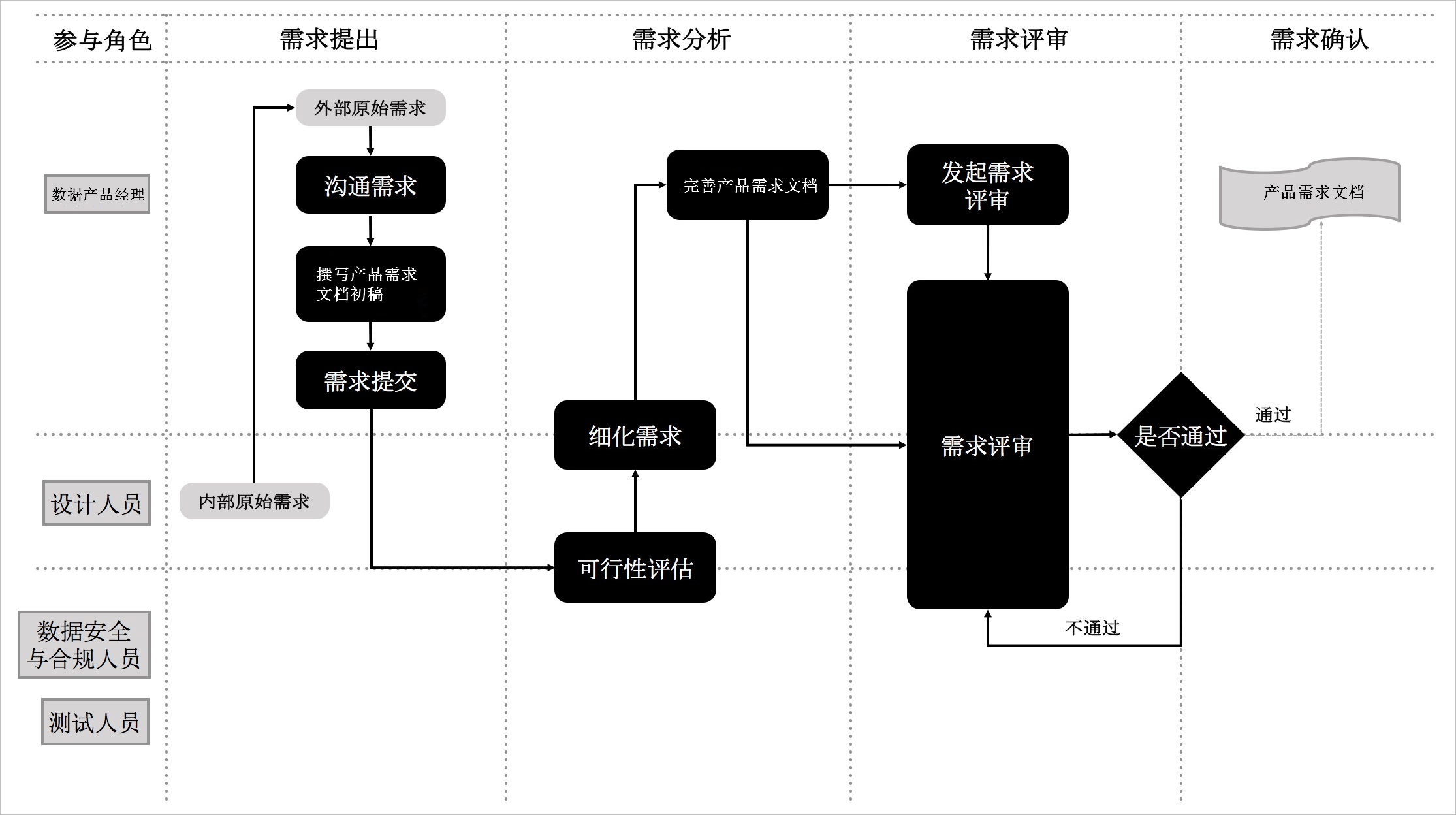
Procedure:
- Propose the requirements
- Communicate with the business side: The data product manager communicates with the business side who proposed the requirements to fully understand the background and goals of the requirements. Note For this step, you must focus on the goals instead of the actual steps on how to meet the requirements.
- Draft the PRD: Fill out the regular request form. For information about the form, see Data warehouse requirement template.
- Communicate with the business side: The data product manager communicates with the business side who proposed the requirements to fully understand the background and goals of the requirements.
- Analyze the requirements
- Analyze the feasibility: The data product manager takes the lead and invites designers and security and compliance experts to review the feasibility.
- Reasonableness of the requirements: Evaluate whether the requirements are reasonable.
- Data feasibility: Evaluate whether the current data can support the development of the data warehouse. If the data is missing, a separate data extraction plan is required.
We also recommend that you perform in-depth data profiling, which includes but is not limited to data integrity, distribution of field discrete values, and the proportions of null values, zero values, and duplicate values.
- Technical feasibility: Evaluate whether the existing data models can support the development requirements. If not, formulate a model transformation plan and evaluate the impact of the model transformation. Test the models in a test environment. Note If model transformation involves key models, may cause capital loss, or requires accurate reconciliation, test engineers must perform a test.
- Data security and compliance: Control the internal data flow and classify the databases, projects, tables, and fields into which data can flow during the development process based on the business requirements. For outbound data, strictly evaluate whether the content and the outbound destination meet the data security requirements of the enterprise. Note This step cannot be skipped.
- Analyze the implementation details: The data product manager takes the lead to confirm the key points of requirement implementation, including but not limited to data specifications, request formats, data update frequency, and requirement priorities.
- Polish the first draft of the PRD.
- Analyze the feasibility: The data product manager takes the lead and invites designers and security and compliance experts to review the feasibility.
- Review the requirements
The data product manager organizes the review meeting and invites designers and test engineers to join. The meeting aims to fulfill the following objectives:
- Discuss questions about the PRD.
- Establish a solution to the questions. Note If open questions that affect the subsequent development process are not resolved, the requirements do not pass the review.
- Confirm the requirements
If no objection is raised within N business days, the PRD is finalized.
Handle iterative requirements
The refined or re-defined requirements that are proposed based on the initial requirements after the PRD is reviewed and finalized are considered iterative requirements.
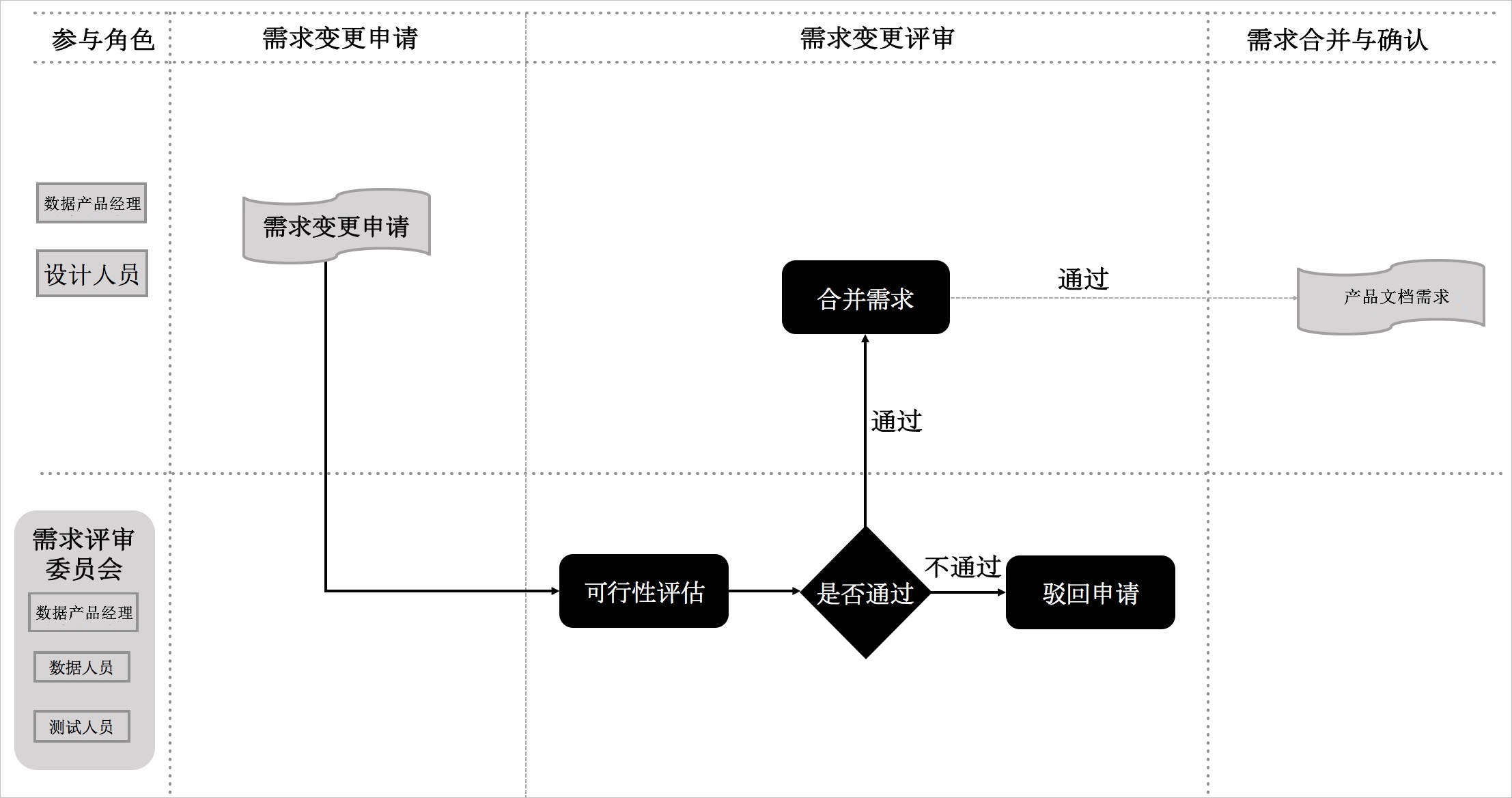
Procedure:
- Apply for a requirement modification
The data product manager communicates with the business side on the iterative requirements and fills out the iterative requirement application form. For information about the form, see Data warehouse requirement template.
Note If the enterprise has a requirement management platform, we recommend that you use the platform and a database to store continuously iterated requirements. - Review requirement modifications
The review committee determines the review method based on the requirement content. The requirements can be reviewed in a review meeting or by email.
The review process involves the feasibility assessment of technologies, data, security, and compliance. If questions about the requirements exist, a consistent solution to the questions must be established.
- Confirm the requirements
The data product manager combines the previously finalized PRD with the iterative requirements to create a new PRD.
If no objection is raised within two business days, the requirements are confirmed.