Website HTTPS
This topic describes how to enable HTTPS for your website.
Background information
HTTPS is more secure than HTTP because it provides security authentication. It uses encryption in transit and identity authentication to ensure data security during transfer. Websites that use HTTPS prevent web browsers from displaying "not secure" warnings.
Configure a free HTTPS certificate
Two types of free HTTPS certificates are available: One-click configuration and Alibaba Cloud free HTTPS certificate configuration. The One-click configuration method is recommended for its simplicity. To use this method, click . After the configuration is successful, click OK. The certificate is valid for 90 days and is automatically renewed one week before it expires.The following steps describe how to configure an Alibaba Cloud free HTTPS certificate.
Go to https://www.aliyun.com/ and log on to your Alibaba Cloud account. (You can use the account that owns the domain name or the product, but using the account that owns the domain name is recommended.)
-
Note
If your domain name already has an HTTPS certificate, skip to Step 6.
After you log on, click Console.
Search for `SSL` and click Certificate Management Service (SSL Certificates) to open the console.
Click
Click Create Certificate. If a message indicates that you have an insufficient number of certificates, click Purchase. You are redirected to the same page that appears when you click Buy Now. Then, proceed with the Buy Now operation.
Click Buy Now.
Select . Choose No stability guarantee, set the quantity to 20, and select Not required. Select the Terms of Service checkbox, and then click Buy Now to go to the payment page.
Click Pay.
After the Congratulations, payment successful message is displayed, return to the SSL Certificate Management console page.
After the payment is successful, click Create Certificate. The number of certificates that you can create is displayed. Enter the domain name and click OK. The certificate status changes to Pending Request.
Click Certificate Signing Request (CSR) to associate the certificate with the domain name for which you are requesting it.
In the Attach Certificate to Domain Name section, enter the domain name that you want to associate with the certificate. You can use the default values for the other options. Click Submit for Review.
Add a verification record and wait for the certificate to be reviewed and issued.
If the domain name was purchased from Alibaba Cloud, log on to the Alibaba Cloud account that you used to purchase the domain name. Choose to go to the Domain Names console.
Click Domain Name List, find the domain name that you purchased, and click Resolve in the Actions column.
Click Add Record. Set Record Type to TXT. Copy the Host and Record Value from the SSL Certificate console and paste them into the corresponding fields. Then, click Confirm.
After you add the DNS record, return to the SSL Certificate console and click Verify. After the Domain validation successful message is displayed, wait for the certificate to be issued.
After the estimated issuance time passes, refresh the page. When the Status changes to Issued, click .
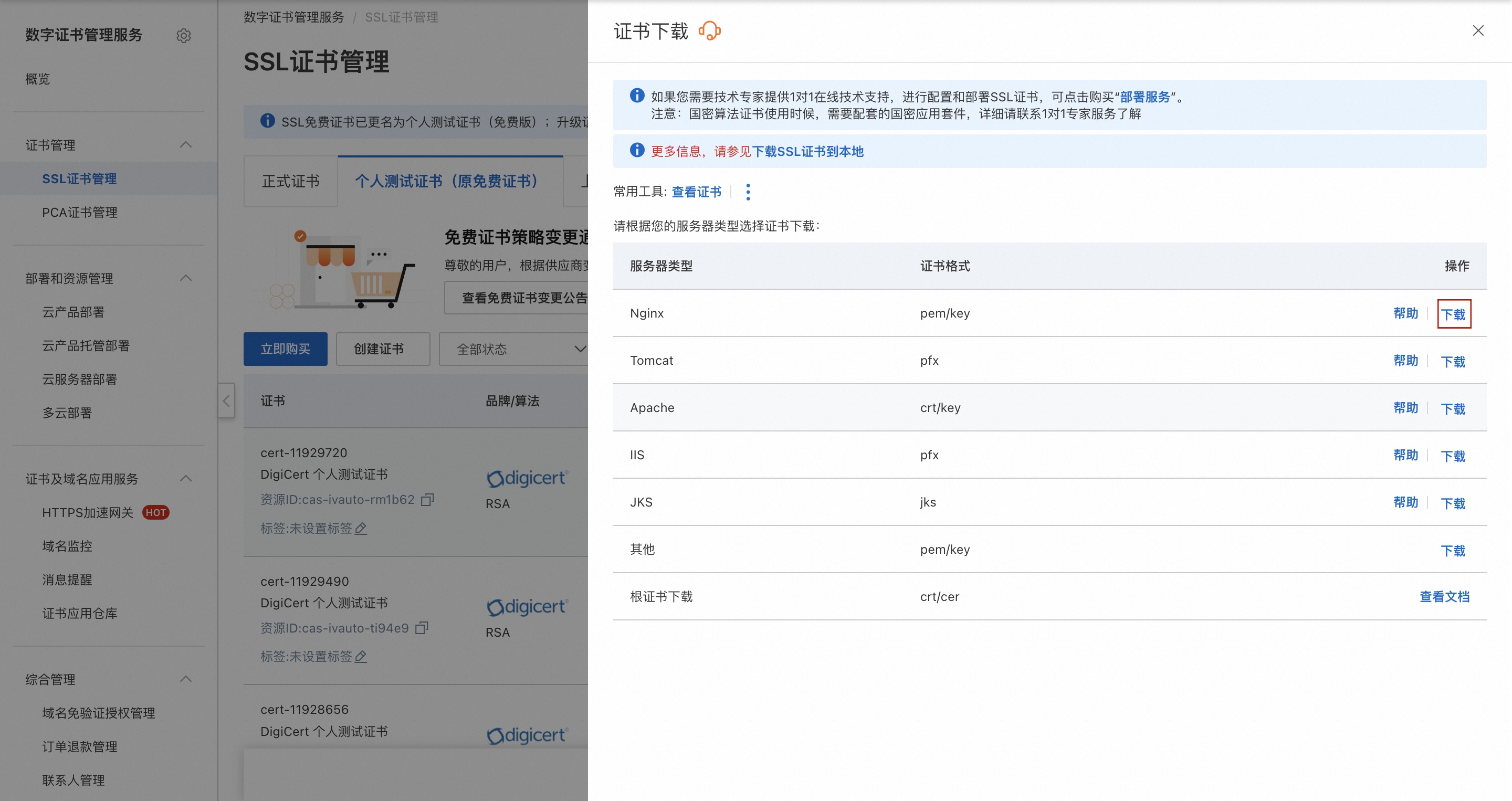
Enable HTTPS on your website. To do this, log on to your website's backend and go to . Wait for the system to retrieve the status of the HTTPS certificate that is associated with the domain name. The Enable HTTPS button appears in the Actions column. Click Enable HTTPS. In the dialog box that appears, select Method 1: Import zip file to use your existing certificate configuration. This completes the process of enabling HTTPS for your website.

To purchase a more advanced certificate, click Purchase Certificate.
After you configure the security certificate, you must publish the website for the changes to take effect.
Troubleshoot the "not secure" warning after enabling HTTPS
Scenario 1: The Alibaba Cloud Personal Test Certificate (Free Edition) is valid for three months. If it has expired, the website displays a "not secure" warning.
Solution: Follow the steps in the Alibaba Cloud free HTTPS certificate configuration section to obtain a new Personal Test Certificate (Free Edition) and then enable HTTPS again.
Scenario 2: The webpage contains external resources that are loaded over non-HTTPS connections, such as JS files, CSS files, or image URLs.
Solution: Remove the resources that are loaded over non-HTTPS connections.
Scenario 3: The domain name specified in the certificate request does not match the domain name that is used to access the website.
Solution: Request a new certificate with the correct domain name.
Scenario 4: An untrusted root certificate is used.
Solution: Resubmit the request by following the preceding steps.