Overview of the Data Quality tutorial
Data quality is the foundation for valid and accurate data analytics. This topic describes the business scenario of the data quality tutorial and explains how to measure data quality.
Prerequisites
Before you start this tutorial, you must complete the Build an online operation analysis platform tutorial. For more information, see Business scenario and development process.
Business scenario
To ensure the quality of your business data, you must first understand the data consumption scenarios and data transformation flows.
This tutorial uses data from the HTTP access logs of a website. Based on these logs, you can compile statistics for page views (PVs) and unique visitors (UVs). You can also group these statistics by terminal type, such as Android, iPad, iPhone, and PC, and by region.
To ensure the quality of the final output data, you can monitor the data at the operational data store (ODS), common data model (CDM), and application data store (ADS) layers of the data warehouse. For more information about data warehouse layers, see Data warehouse layers. This tutorial is based on the Build an online operation analysis platform tutorial. The ods_user_trace_log, dw_user_trace_log, and rpt_user_trace_log tables represent the ODS, CDM, and ADS layers of the data warehouse, respectively.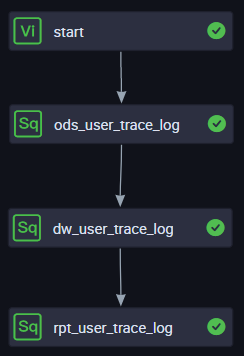
Data quality assessment
You can assess data quality from four perspectives: integrity, accuracy, consistency, and timeliness. For more information, see Data quality assessment standards.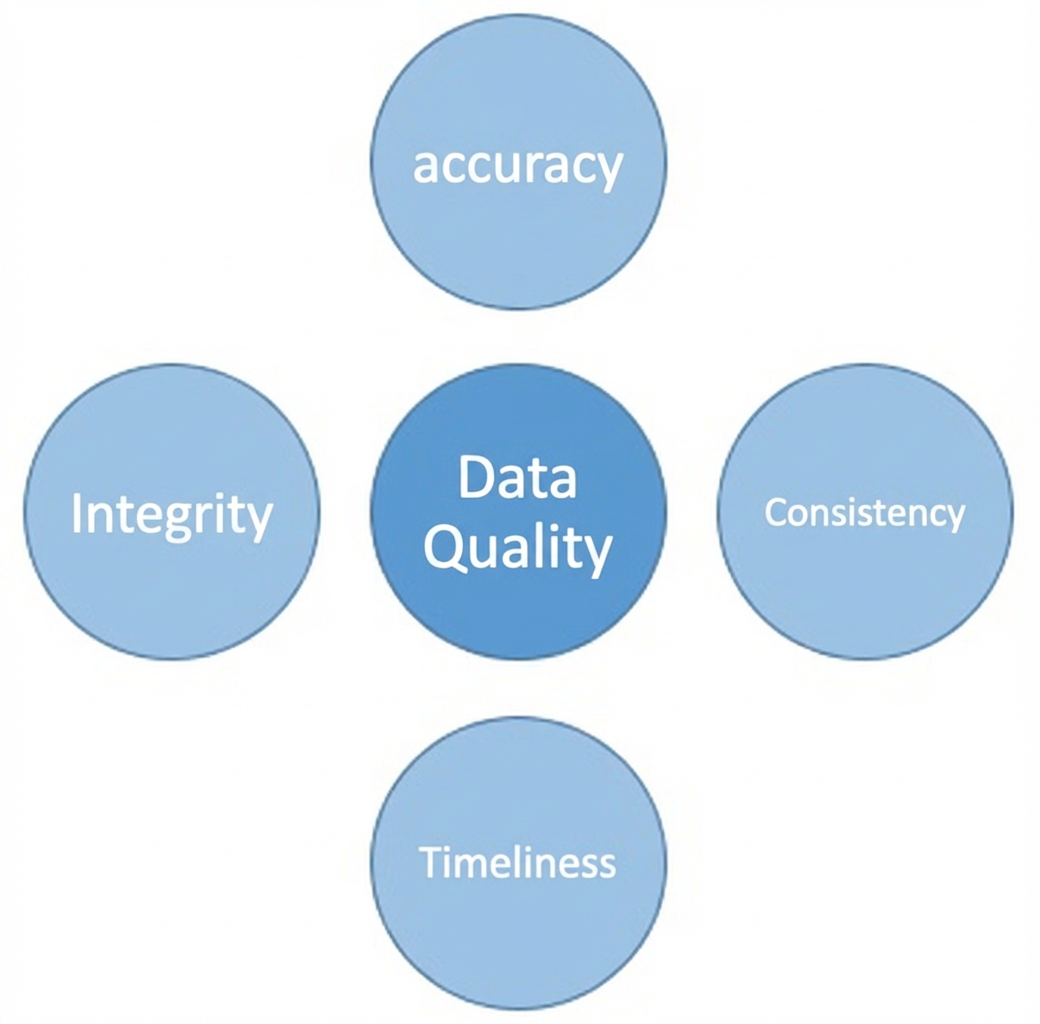 In this tutorial, you will learn to ensure data integrity, accuracy, and consistency by monitoring data quality risks. You will also learn to ensure data timeliness through monitoring.
-
Integrity
Integrity refers to whether data records and information are complete. Missing data can include missing records, such as an abnormal number of table rows, or missing information in a specific field, such as a null value. In this tutorial, you will focus on the data generation stage (Tablestore data referenced by a MaxCompute foreign table) and the data transformation stage (data warehouse CDM and ADS layers). You will check if the number of table rows is greater than 0, if the fluctuation in the number of table rows is normal, and if any fields have null or duplicate values.
-
Accuracy
Accuracy refers to whether the data in a record is correct and free of anomalies. For example, in this tutorial, if a UV or PV value is less than 0, the data is clearly incorrect.
-
Consistency
Data must be consistent across different business flows and nodes. For example, if the
provincefield in a table contains both Zhejiang and ZJ, two separate records are returned when you group by province. -
Timeliness
Timeliness primarily refers to the timely generation of data at the final ADS layer. To ensure timeliness, data must be generated promptly at each stage of the entire data transformation flow. This tutorial uses the intelligent monitoring feature of DataWorks to ensure timeliness at each stage of data transformation.