Develop and use SKILLs in Qwen Work
This topic demonstrates how to develop a SKILL to operate your enterprise software and use it in Qwen Work.
Background, challenges, and solution
When using a desktop agent, enterprise customers often face the following challenges:
Low accuracy that fails to meet enterprise requirements. Currently, an agent's actions are not guaranteed to be accurate when operating enterprise software. Incorrect operations can cause direct financial losses for the business, such as in supply chain processes for preparing customs declarations or in e-commerce for listing new products.
Slow execution speeds, making agents unsuitable for production workflows. An agent goes through countless "sense-plan-act" cycles. When interacting with enterprise software, it often becomes stuck in lengthy, ineffective attempts or takes a long time to complete even partial tasks.
High token consumption, resulting in low cost-effectiveness. Even for repetitive tasks, an agent must continuously use the large model.
To address these challenges, this topic provides a solution:
First, use RPA to develop standardized enterprise operations into repeatable automation flows. These flows can then be integrated as SKILLs that the agent can use.
When employees use the agent, it can leverage these SKILLs to deliver tangible business value.
Use case
Business requirement
Operations staff need to analyze product sales data daily. They face two issues: first, products are sold on multiple platforms, which requires them to manually download sales data from each shop for analysis; second, some routine analysis tasks still require inefficient manual effort and summarization.
Implementation
Develop a SKILL that includes two processes: data collection and analysis. An RPA-developed automation flow handles data collection. The analysis requirements are explicitly defined within the SKILL.
Operations staff use this SKILL in Qwen Work.
Architecture

High-level steps:
Develop an automation flow using RPA and publish it as an MCP Tool.
Create the corresponding SKILL in the RPA console.
Prepare an RPA service robot to act as the SKILL runtime.
Add the SKILL and MCP Server in Qwen Work.
Procedure
Install Qwen Work
To learn how to install and use Qwen Work, see https://qwenwork.cn. This topic uses Qwen Work 0.1.7.
Develop automation flow and publish as MCP Tool
For more information about developing an automation flow with RPA, see Develop an automation flow.
The input parameters and process outputs for the automation flows in this example are as follows:
Automation flow
Input parameter
Process output
Automatically retrieve shop product sales data
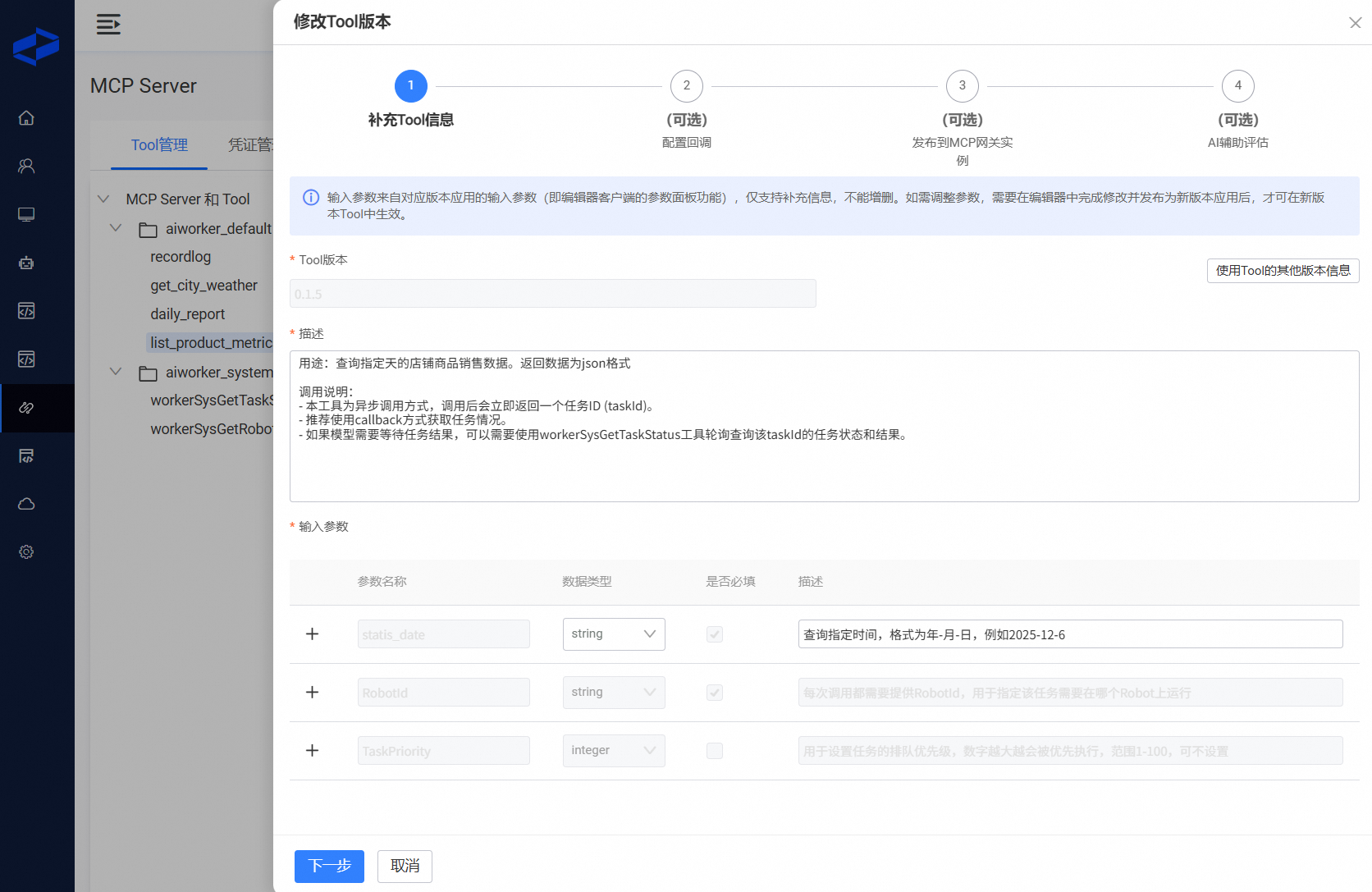
statis_date: The date to query for product sales data.
The retrieved product data is in JSON format and includes the product ID, product name, style tag, units sold, unit price, and number of favorites for each shop.
The automation flow saves the retrieved data using task_result.
Submit daily report
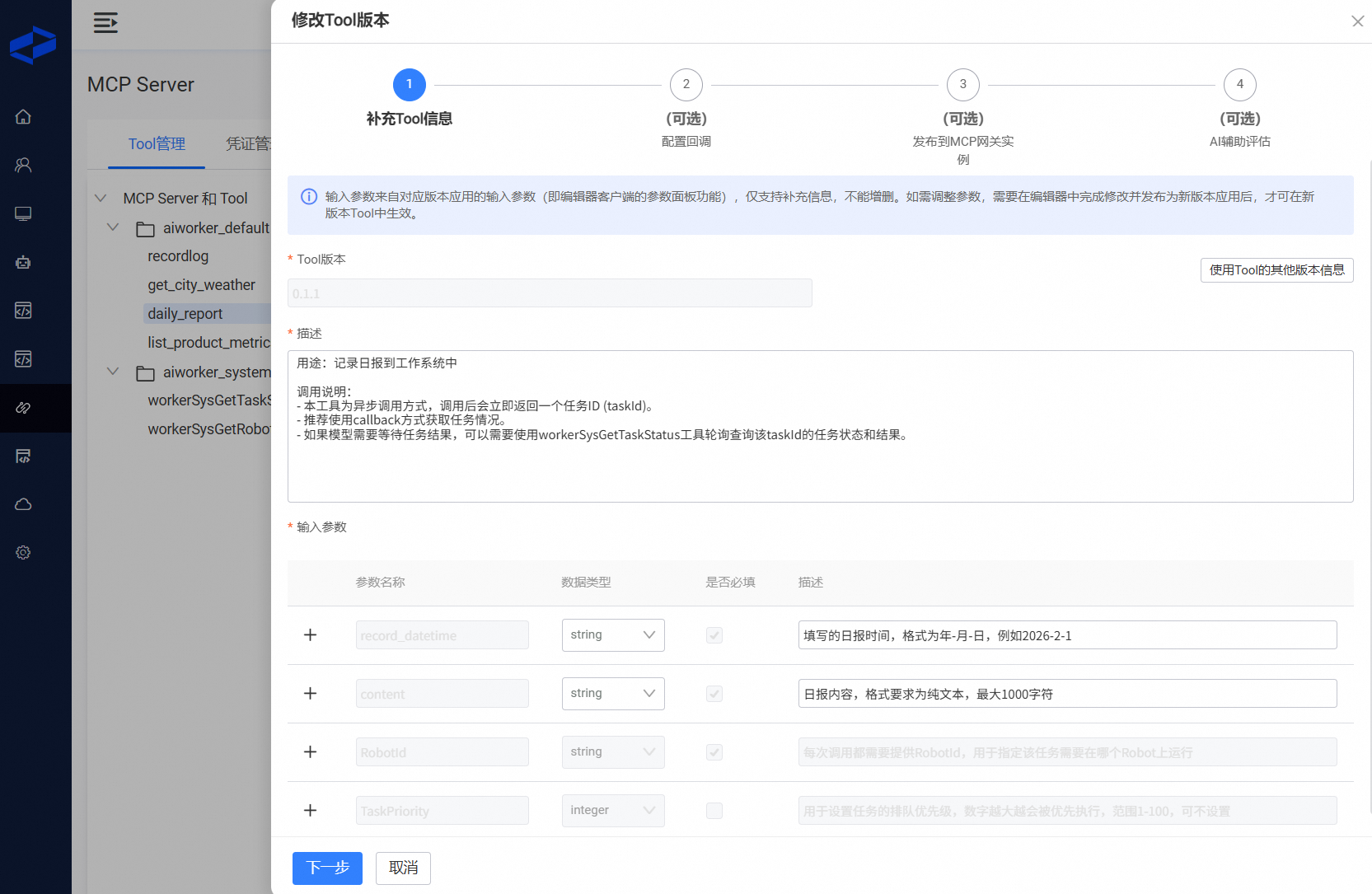
record_datetime: The date of the report.content: The report content.
None
ImportantThe implementation of the automation flows is specific to this example because each enterprise uses different e-commerce platforms, requires different data, and operates different software. For more information, see Develop an automation flow to create automation flows that fit your business processes.
Publish the automation flows as an RPA application. For more information, see Publish and manage applications.
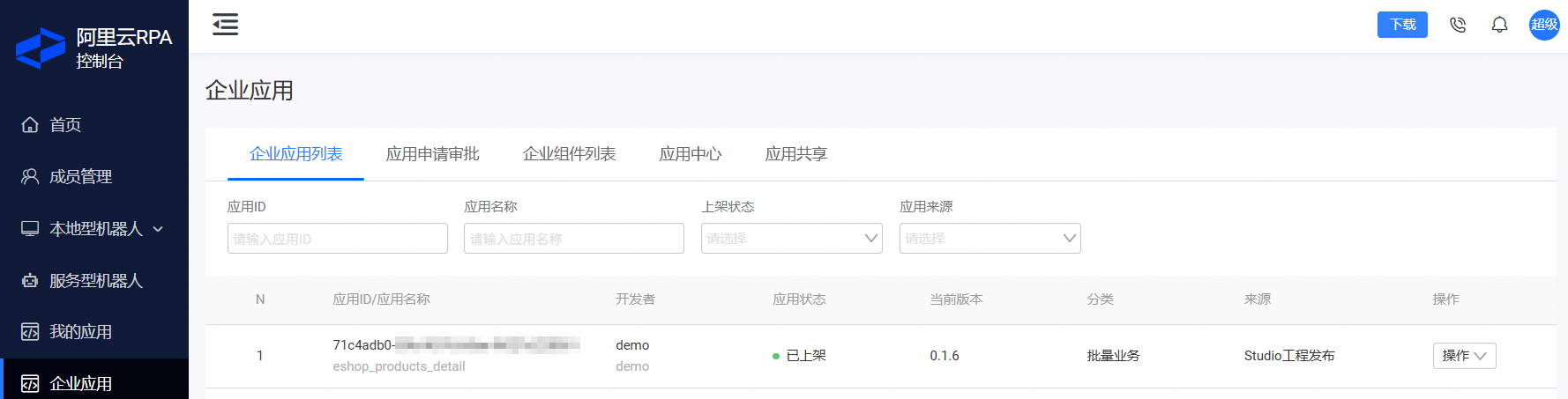
Publish the application as an MCP Tool. For more information, see Publish as an MCP Tool. Details of the published MCP Tools are as follows:
Get product sales data
Submit daily report
 Important
If the automation application has a long runtime, add the estimated duration and the recommended agent polling interval to the Tool Description.
Create a SKILL
In SKILL Management on the RPA console, you can automatically create and edit SKILLs online.
Automatically generate a draft version of the SKILL.
Click
Create SKILL. In the first step, select the two MCP Tools that you published in the previous step, as shown in the following figure.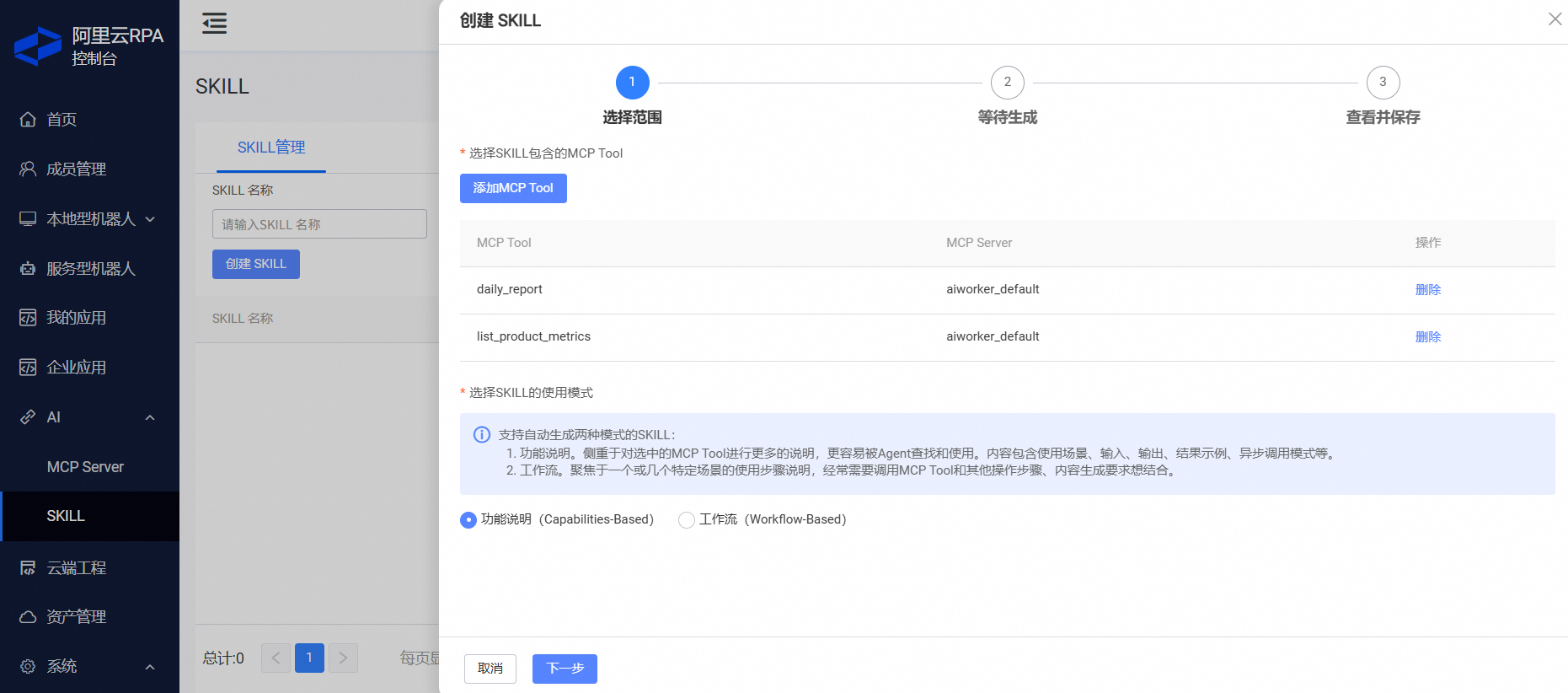
Click
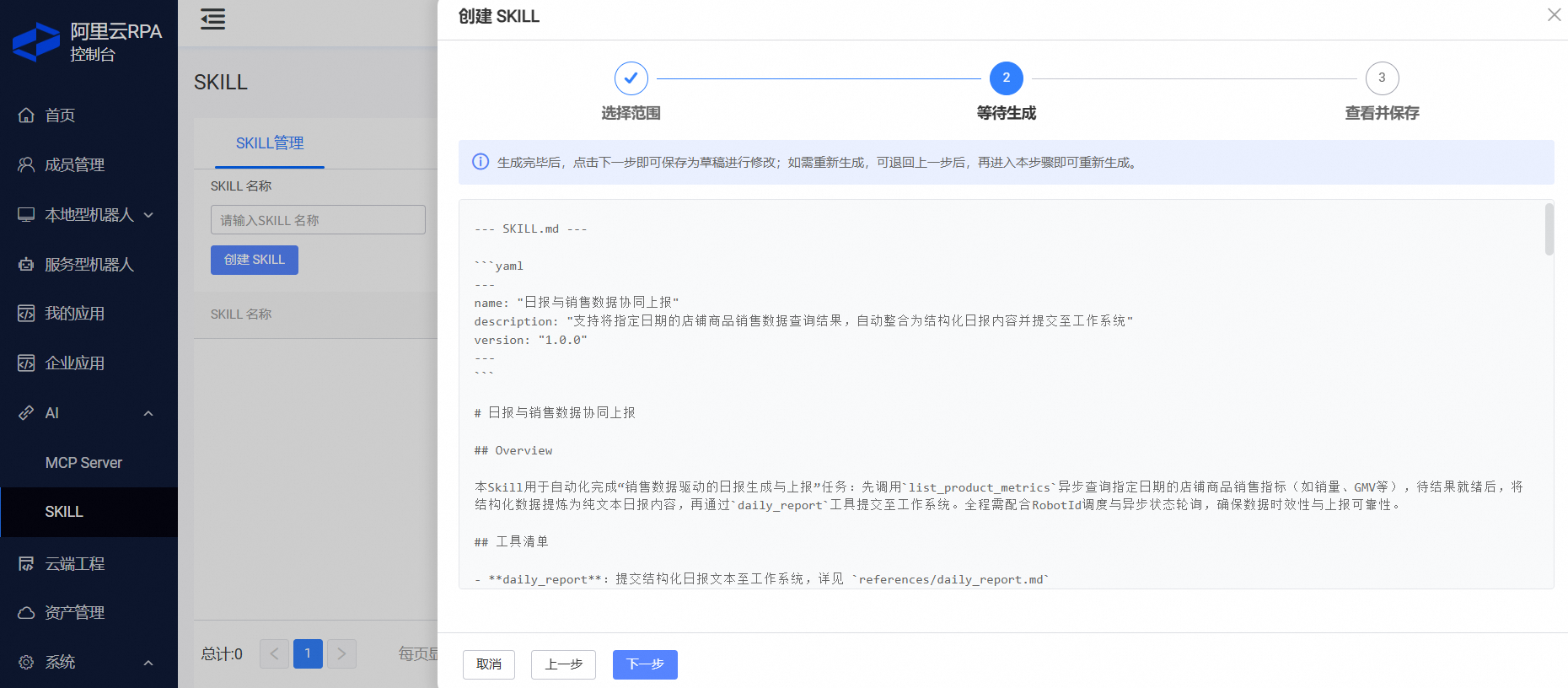
Next. In the second step, the large model automatically generates the SKILL based on the information from the selected MCP Tools and best practices.
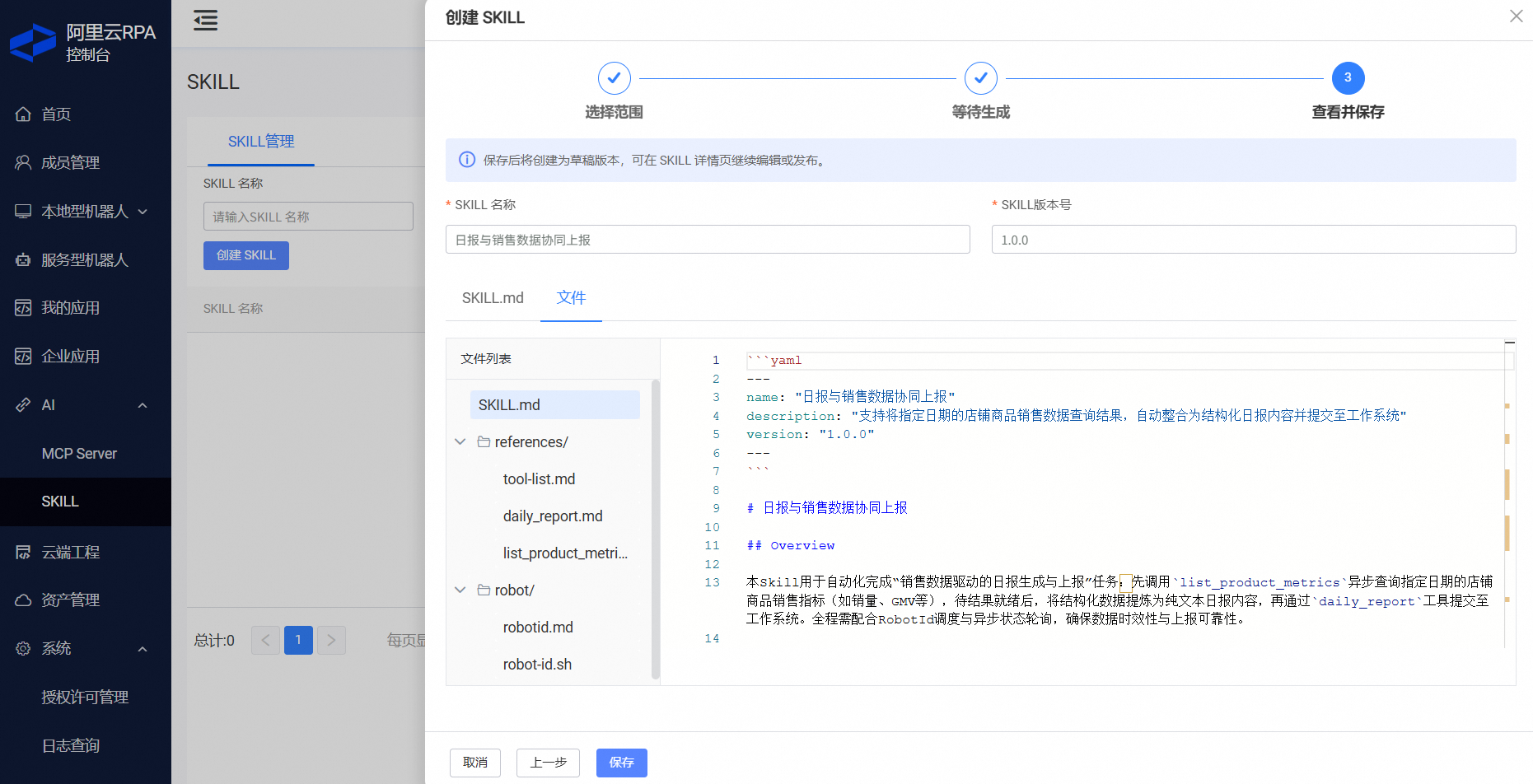
In the third step, you can view the complete content of the generated SKILL. You must save the draft before making further edits.
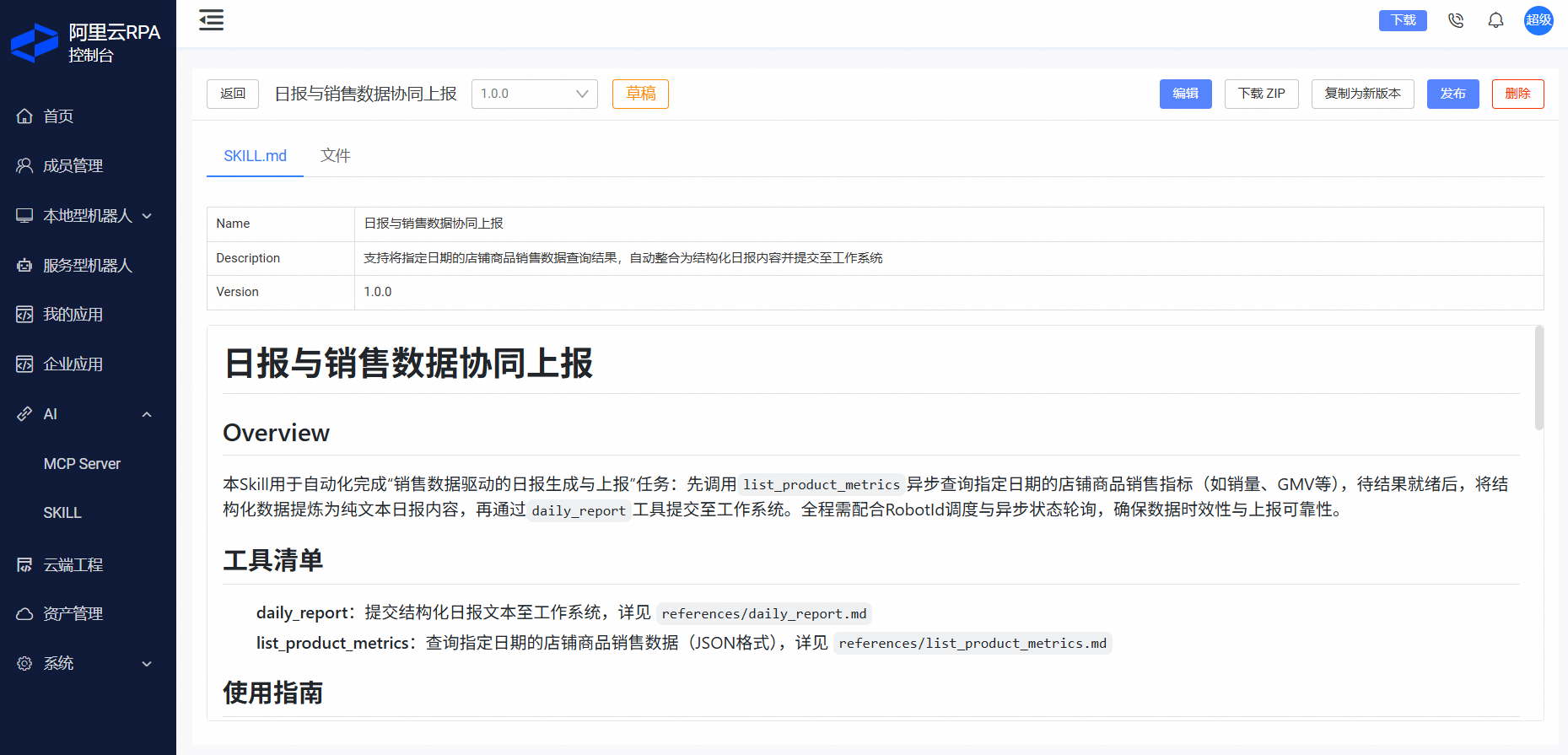
After you confirm that the draft is correct, publish the version. Before you publish, the system checks the SKILL content for security. You can only publish versions that pass this security check.
Prepare the SKILL runtime
This example uses an RPA service robot as the SKILL runtime.
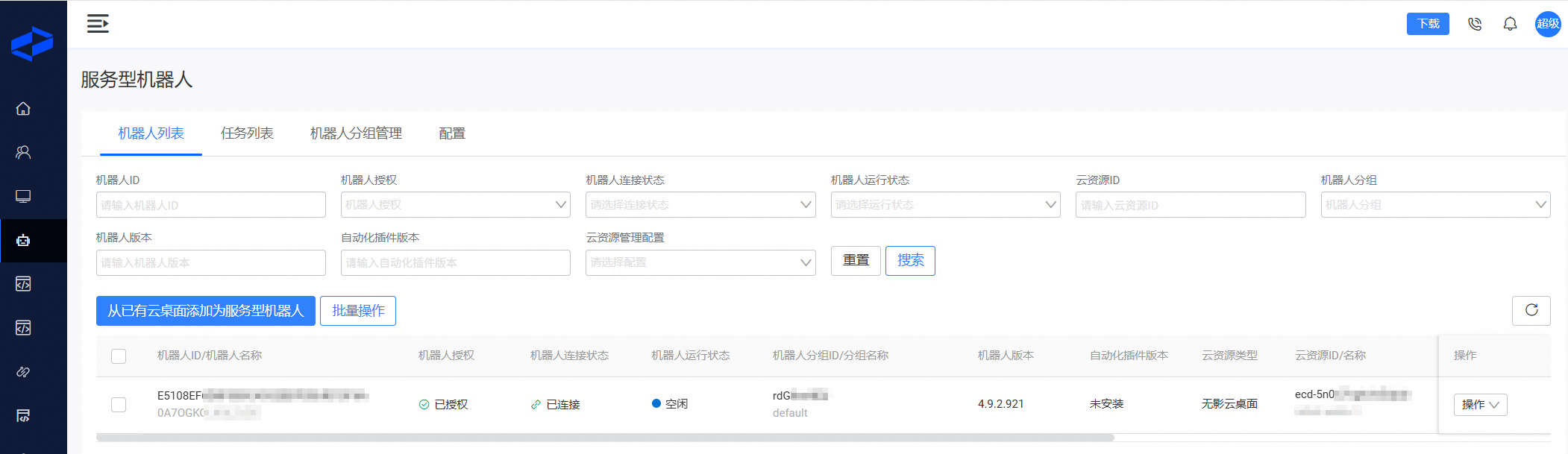
A service robot requires Elastic Desktop Service. For configuration information, see Run an automation flow in service mode. After the service robot is created, it appears as shown in the following figure. This service robot runs the SKILL in the subsequent steps.
Add MCP Server and SKILL
Add an MCP Server.
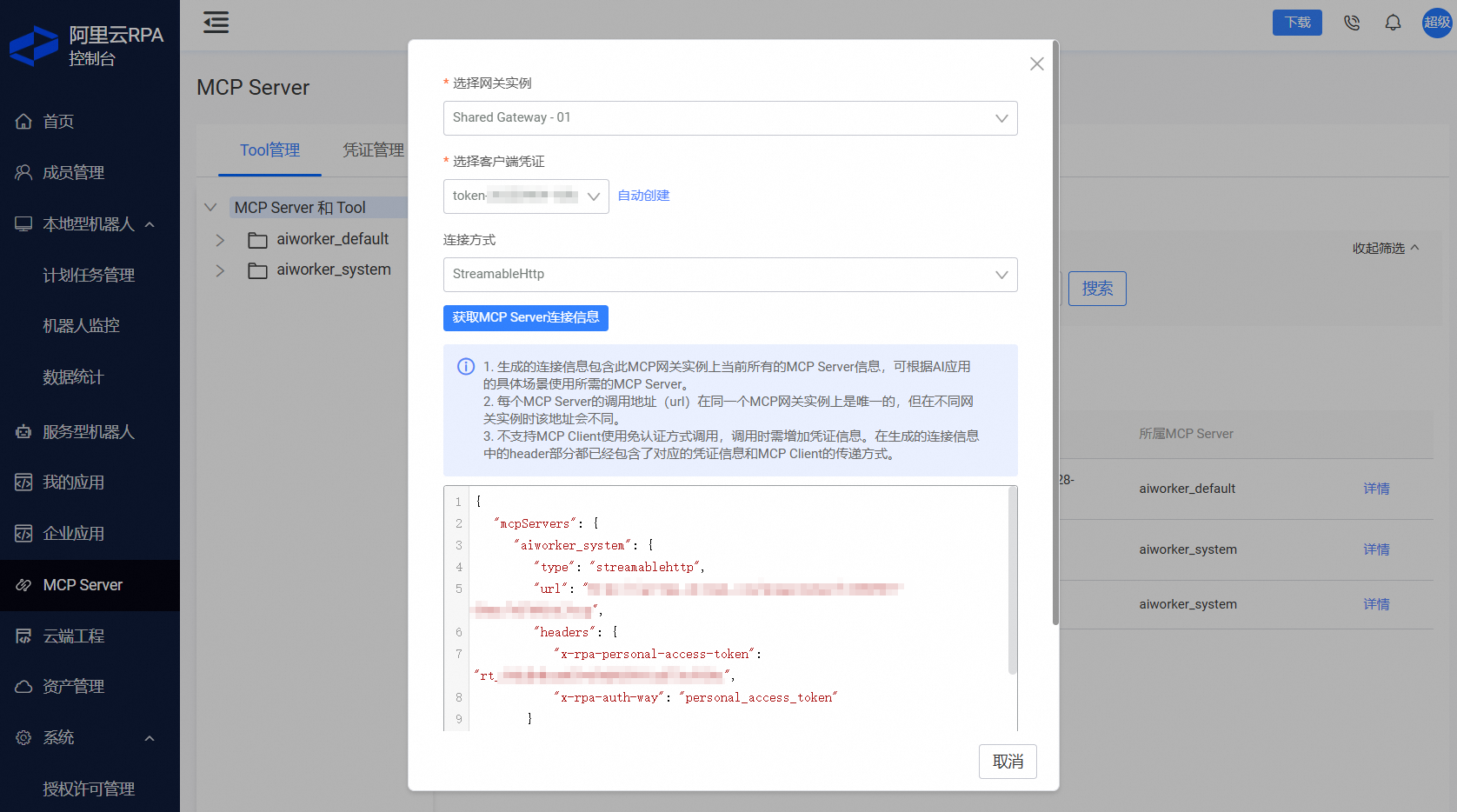
In the RPA console, go to the
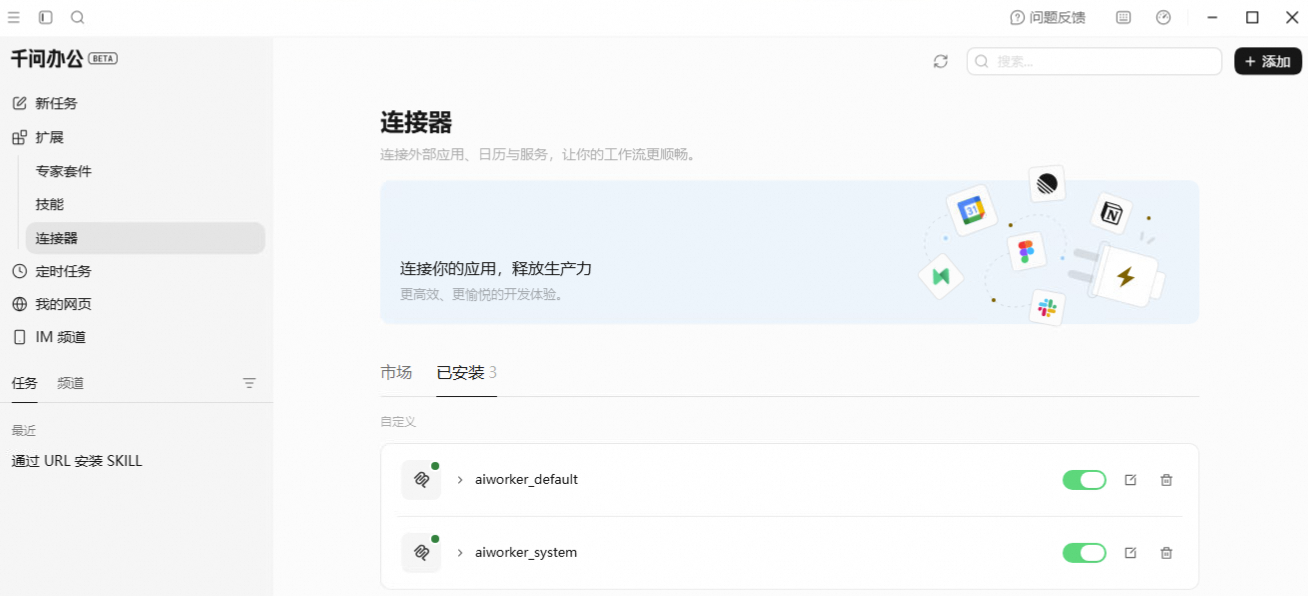
MCP Servermenu to obtain the MCP Server configuration. As shown in the following figure, this configuration includes details for multiple MCP Servers.In the
Connectorsmenu in Qwen Work, selectPaste JSON Configuration. After the server is added, you will see at least two new MCP Servers.
Add the SKILL.
You can install the SKILL in the agent using an online URL. Alternatively, you can download the SKILL.zip file and install it manually.
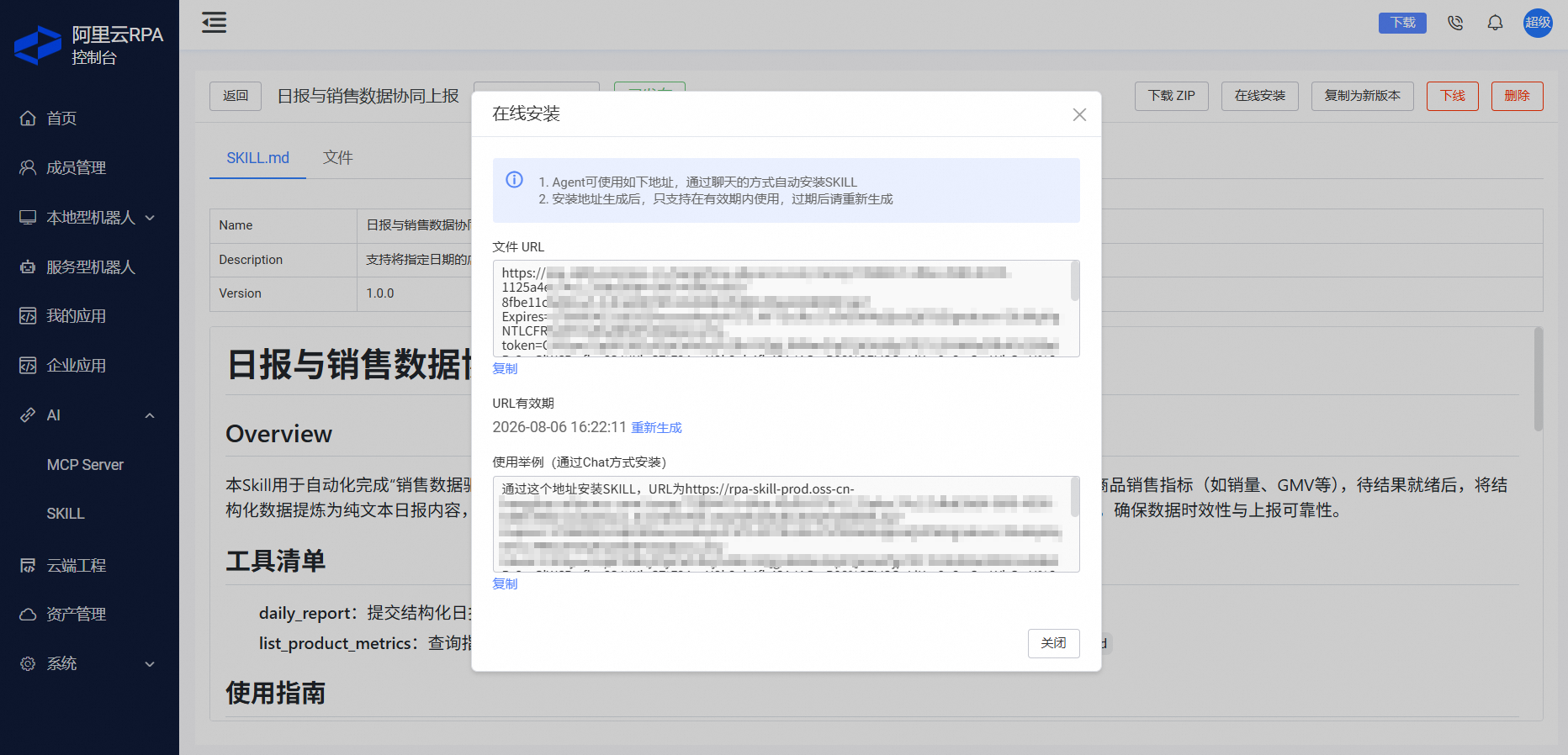
In the
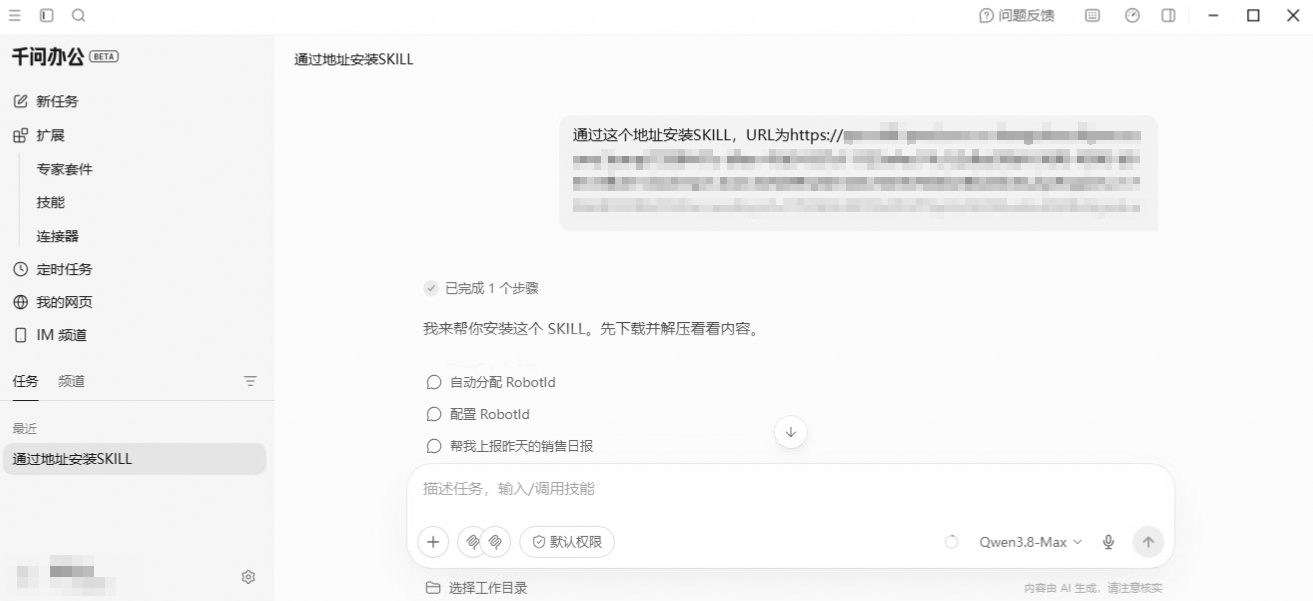
SKILLmenu, clickOnline Installto obtain the download URL for this SKILL version. The link is valid for one hour. If it expires, you can generate a new one by clicking the button again.In a Qwen Work conversation, add the SKILL. As shown in the following figure, you can complete the SKILL installation online.
(Optional) Set the RobotID.
WarningDuring the proof-of-concept (POC) phase, you can let the SKILL automatically fetch an available service robot from the server. The server assigns a service robot at random.
For integration, development, and production use, your application or calling system should handle service robot allocation instead of using the automatic method.
Results
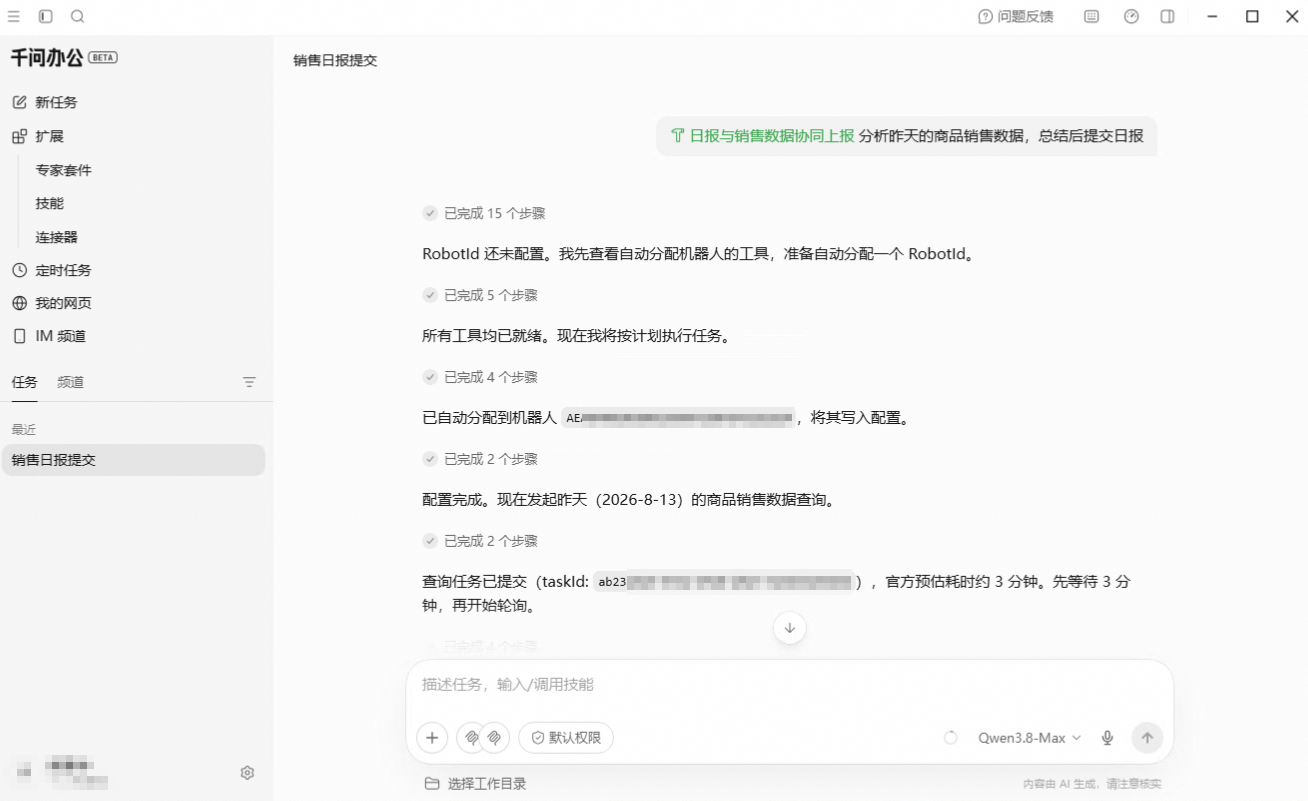
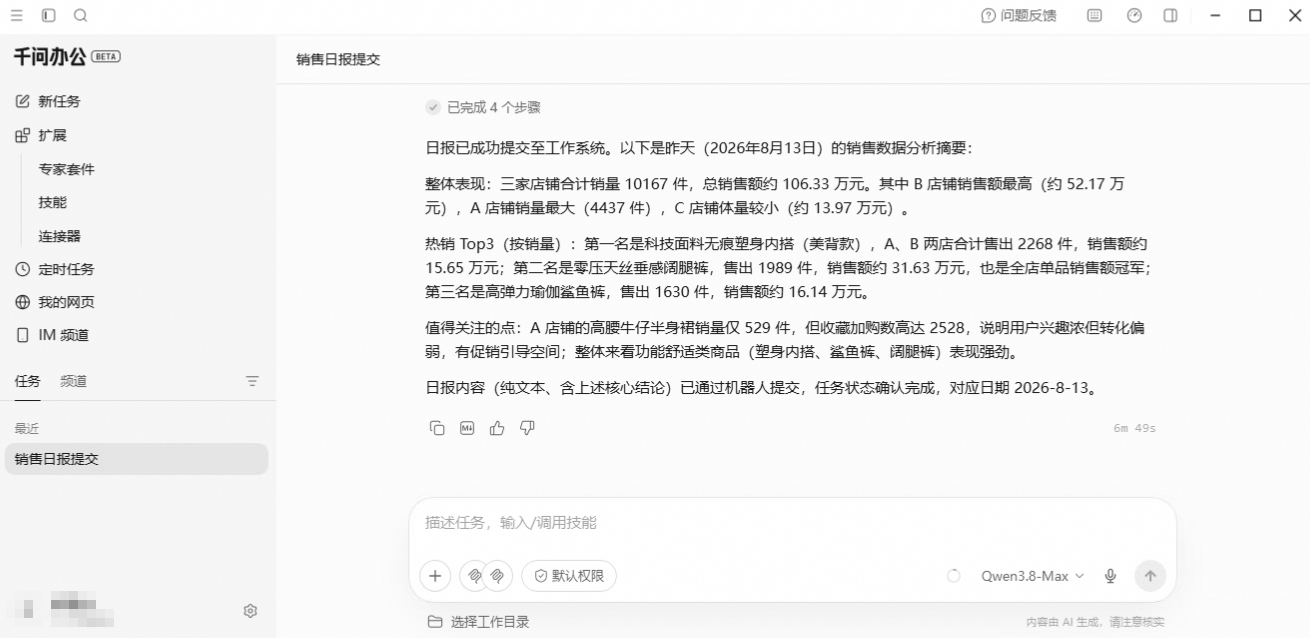
In a conversation in Qwen Work, enter a prompt to analyze product sales data for a specific day, summarize the findings, and submit a daily report. The following figures show an example:
The product sales data in this topic is for demonstration purposes only.