FinOps roles
A "role" refers to a broad group of stakeholders, not a single person. In complex organizations, a role can include people in several related jobs. In small companies, one person may take on multiple roles. These roles collaborate closely in FinOps practices and offer expertise and support in their respective areas.
Implementing FinOps is not the sole responsibility of a FinOps team. It requires close collaboration among many stakeholders in different roles throughout an organization. Guided by the FinOps framework, all roles involved in using, monitoring, and managing cloud resources will benefit.
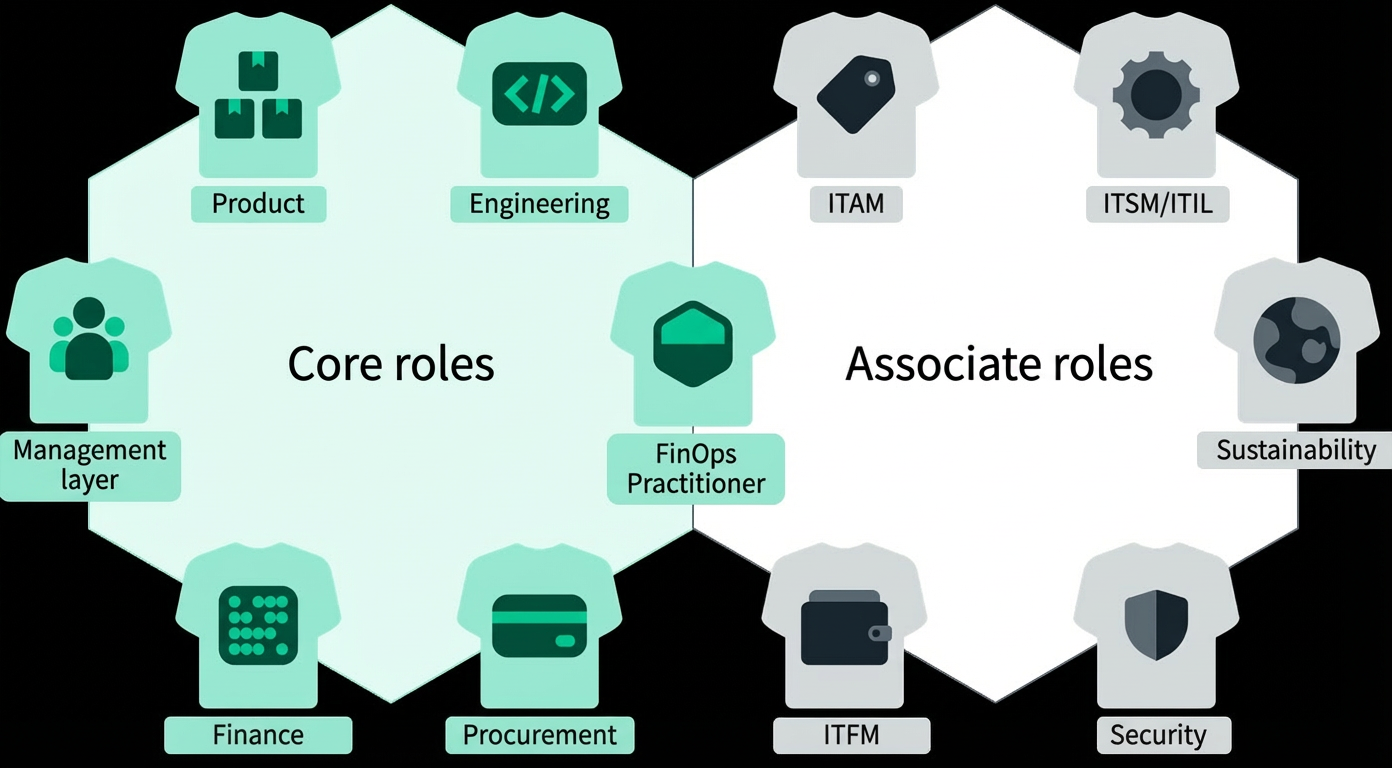
Core roles
In most organizations, several core roles participate in FinOps practices. These roles come from different departments across the organization. They collaborate to ensure that cloud resources are used efficiently and effectively. Each core role has specific responsibilities in both company operations and FinOps practices. They also have different perspectives, challenges, metrics, and desired outcomes.
|
FinOps practitionerDrives collaboration among business, engineering, and finance teams by applying the FinOps framework. This work builds a FinOps culture, promotes evidence-based decision-making, and helps the organization realize the business value of cloud computing. FinOps responsibilities include the following:
|
ManagementPromotes FinOps across the organization, addresses FinOps challenges, and aligns cloud technology decisions with business goals. FinOps responsibilities include the following:
|
ProductDefines requirements and prioritizes FinOps actions that align with business goals. Engages stakeholders and explains the benefits of using cloud technology. This helps increase understanding and support, which in turn drives business value. FinOps responsibilities include the following:
|
|
EngineeringDesigns, manages, and optimizes cloud infrastructure. This improves the cost-effectiveness of cloud resources, ensures performance and reliability, and maintains a secure and compliant cloud environment. FinOps responsibilities include the following:
|
FinanceProvides financial expertise and works closely with FinOps practitioners. This role reconciles cloud service provider invoices with cloud billing data to ensure accuracy. It also forecasts cloud spending, creates budgets, and implements effective cost allocation. FinOps responsibilities include the following:
|
ProcurementProcures cloud services and optimizes supplier relationships to ensure that partnerships are cost-effective and compliant. This role works closely with FinOps practitioners to optimize rates and manage cloud costs. FinOps responsibilities include the following:
|


Associated roles
Some roles in an organization may not directly participate in FinOps practices, but they still collaborate with FinOps practitioners. These associated roles come from traditional or new functional areas. These areas include sustainability, IT Asset Management (ITAM), IT Financial Management (ITFM), Technology Business Management (TBM), security, IT Service Management (ITSM), and IT Infrastructure Library (ITIL). The cross-functional collaboration capability within the FinOps framework describes how the work of these associated roles supports FinOps practices.
|
ITSM/ITILWorks closely with FinOps practitioners to standardize and streamline IT service operation processes. This improves service quality and reliability. It also ensures that IT services meet the requirements of the Service-Level Agreement (SLA) while balancing performance goals with cloud cost management priorities. Responsibilities related to FinOps practices include the following:
|
ITAMWorks closely with FinOps practitioners to combine expertise and data. This collaboration improves the efficiency, transparency, and value of IT asset management related to cloud usage. It also optimizes costs, ensures compliance, and supports strategic business goals while balancing cloud cost management priorities. Responsibilities related to FinOps practices include the following:
|
SustainabilityWorks closely with FinOps practitioners to ensure that cloud resource usage supports sustainable development. This role drives accountability and accelerates progress toward broader sustainability goals, while also balancing cloud cost management priorities. Responsibilities related to FinOps practices include the following:
|
|
SecurityWorks closely with FinOps practitioners to leverage their expertise and insights. This collaboration optimizes cloud security spending, improves the financial governance of the IT security team, and strengthens the organization's overall cloud security posture. Responsibilities related to FinOps practices include the following:
|
ITFMWorks closely with FinOps practitioners to increase the transparency of IT spending and support informed decisions. This collaboration ensures that cloud computing and traditional IT investments align with business priorities and are cost-effective. It also delivers measurable value to the organization. Responsibilities related to FinOps practices include the following:
|


