Enable HTTP/2 for an API group
API Gateway automatically enables HTTP/2 for all HTTPS-enabled APIs. HTTP/2 reduces latency through multiplexing and header compression, requiring no additional configuration.
How HTTP/2 works
HTTP/2 improves on HTTP/1.x in two areas:
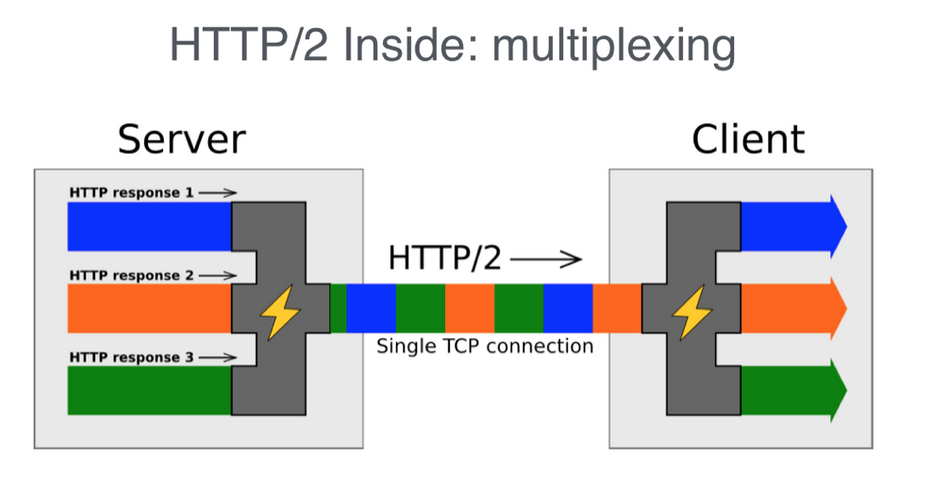
Multiplexing: HTTP/1.x requires multiple TCP connections to send and receive requests and responses in parallel. HTTP/2 breaks each request or response into independent frames and interleaves them as streams over a single TCP connection. The receiver reassembles the streams on its end. This reduces latency and allows a client to use one or a few TCP connections instead of many, even when sending large amounts of data.
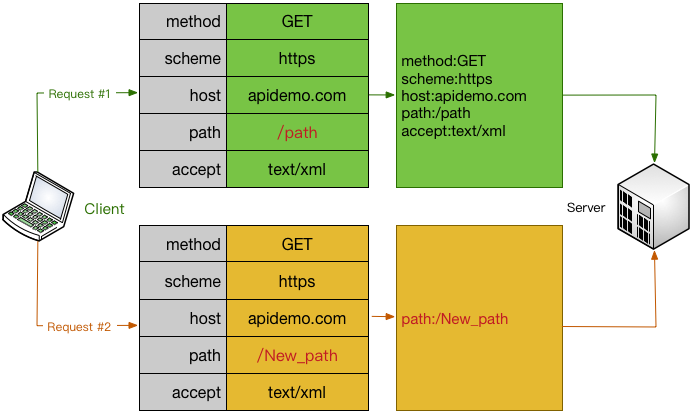
Header compression: HTTP/1.x sends a complete header with every request, even when most fields are unchanged. HTTP/2 maintains a header field table shared between client and server for the duration of a connection. The table stores header key-value pairs. If a pair already exists in the table, it is omitted from subsequent messages. The table is updated with each message and cleared only when the connection closes. New key-value pairs are appended to the end of the table or replace existing entries with the same key. This significantly reduces per-request overhead.
Enable HTTP/2 for an API group
HTTP/2 is enabled automatically for all APIs that support HTTPS requests — no additional configuration is required. HTTP/2 can be used only by APIs that support HTTPS requests. If an API does not support HTTPS, HTTP/2 is not available for that API. To enable HTTPS for an API, see Call APIs through an HTTPS domain name.