Cloud strategy architecture planning
Before you implement a cloud strategy, you must plan your cloud architecture. This plan covers four areas: organizational architecture, business architecture, deployment architecture, and technical architecture. The planning process involves three key actions: assess your current state, plan for the future, and create a roadmap.
1. Organizational architecture planning
After you decide on a cloud strategy, define the organizational structure and teams responsible for its delivery and implementation. Create an organizational chart that shows the departments and people involved. Build your cloud strategy team based on your existing structure.
Establish a virtual or dedicated team for cloud strategy planning and implementation based on your existing organizational structure. This team forms a Cloud Center of Excellence (CCoE). The CCoE acts as a central department responsible for creating, maintaining, implementing, and evaluating the cloud strategy.
Different business units have different levels of importance in the cloud strategy. Key roles in the virtual team or CCoE include technical staff, business teams, and members from finance and procurement departments involved in cloud adoption. Technical staff are essential. Business teams are included because the motivation for using cloud technology includes business drivers, not just technical ones. Finance and procurement departments are included because using cloud technology shifts capital expenses to operational expenses. This shift affects billing, payment, and financial systems.
For more information about preparing your organization and the CCoE, see the "Organization, talent, and culture" chapter.
2. Business architecture planning
Before you implement a cloud strategy, assess your current business architecture. A business architecture typically includes a business layer, platform layer, data layer, and resource layer. It also includes cross-cutting capabilities such as marketing, traffic, and security. As the following diagram shows, your company might already use some cloud technologies. You can annotate these technologies in the diagram.
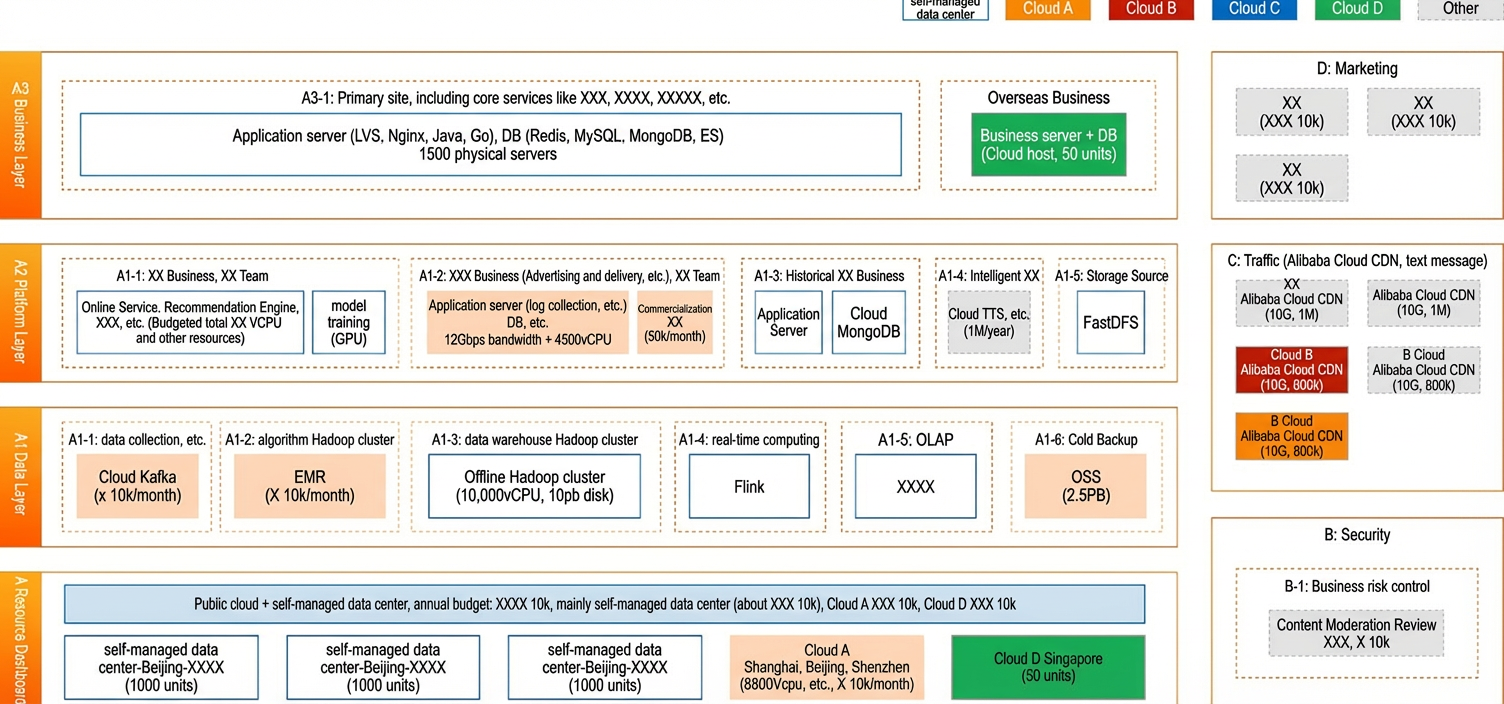
Use the business architecture diagram to define the scope and goals for your cloud strategy implementation. Create a business implementation path and determine the scope of impact.
Different business applications can follow different migration paths based on the recommendations in "Application migration planning".
3. Deployment architecture planning
The deployment architecture for your cloud strategy centers on infrastructure. Create a diagram of your current deployment architecture by gathering information about its current state. Consider your requirements for cost, networking, security, and efficiency. Plan your future deployment architecture by building a landing zone. Then, create a migration plan to serve as your implementation path.
For more information about landing zones, see "Build a cloud landing zone".
For a mapping between traditional IDC infrastructure and cloud products, see the table in "Cloud technology adoption".
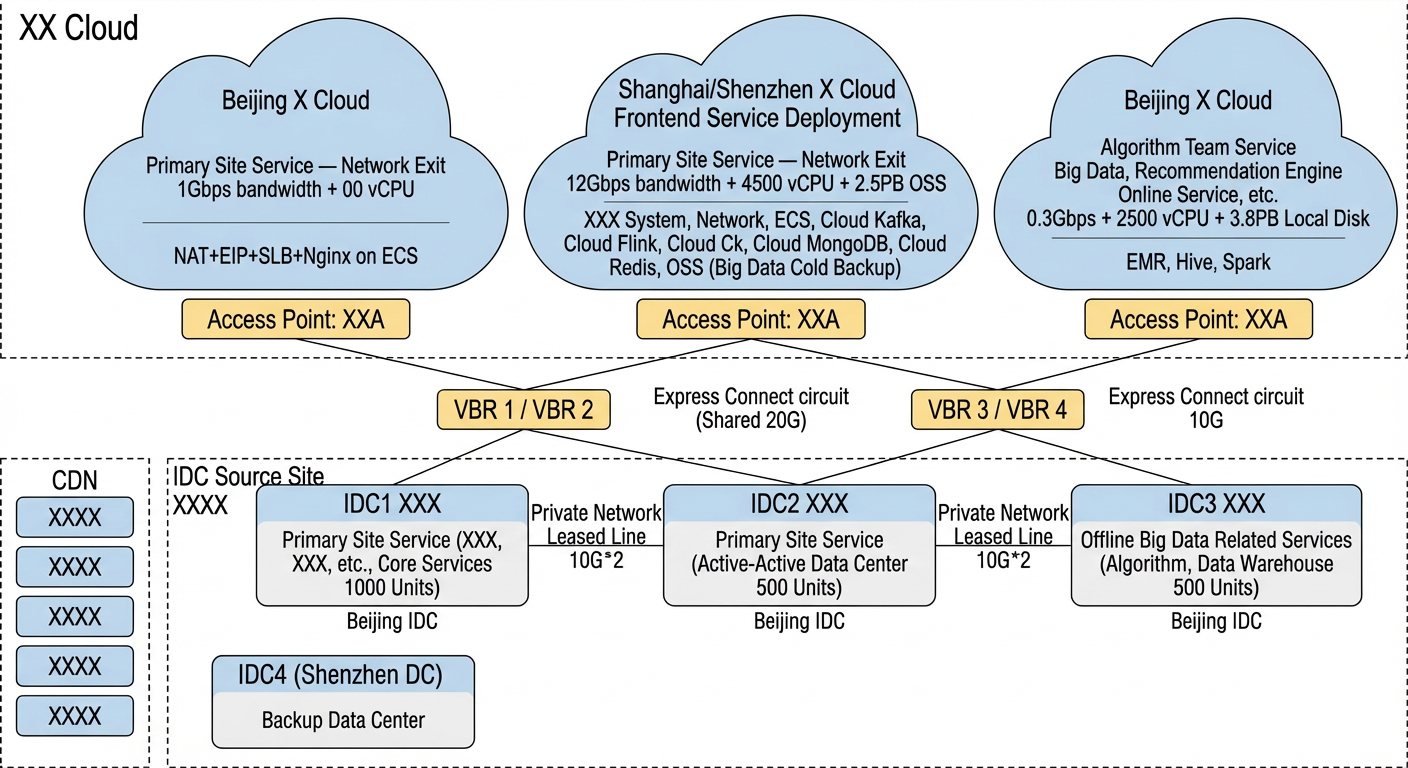
4. Technical architecture planning
When you implement a cloud strategy, review your current technical architecture. Identify your key technology stacks and areas for improvement. To maintain stability, solve current problems, and prepare for future growth, compare your current technology with cloud-native options. Consider the costs and benefits. Decide whether to maintain, transform, or introduce new technologies, and then create a roadmap.
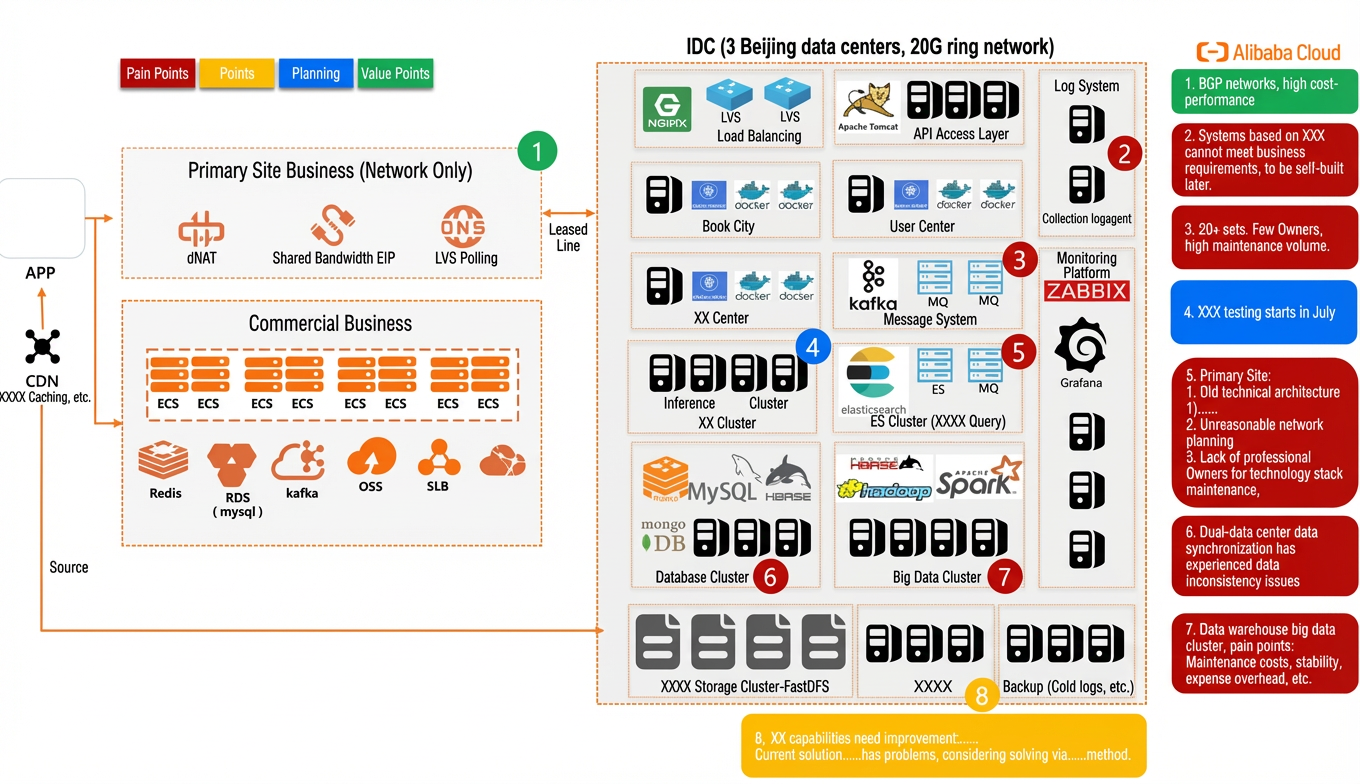
Cloud platforms offer more out-of-the-box capabilities than traditional data centers. Early in your cloud strategy, you will likely retain most of your original technology stack. You can migrate applications to the cloud first, and then gradually refactor them to use cloud-native features. This approach keeps your business stable during the initial migration and ensures a smooth implementation. However, to realize the most value from your cloud strategy, you must transform your technology stack by adopting cloud-native technologies.