Shunde Rural Commercial Bank
About the customer

Shunde Rural Commercial Bank is a financial institution with a 68-year history. It was restructured into a rural commercial bank at the end of 2009. The bank was one of the first three in Guangdong Province to complete this transition. For years, it has been a leader in IT development among China's rural credit cooperatives.
Business goals
Shunde Rural Commercial Bank partnered with Alibaba Cloud and Ant Group to migrate its core business systems. The migration began with systems for Internet finance, Class II and Class III bank settlement accounts, and online credit services. This project shifts these systems from a traditional IOE architecture to the Alibaba Finance Cloud platform.
Solution
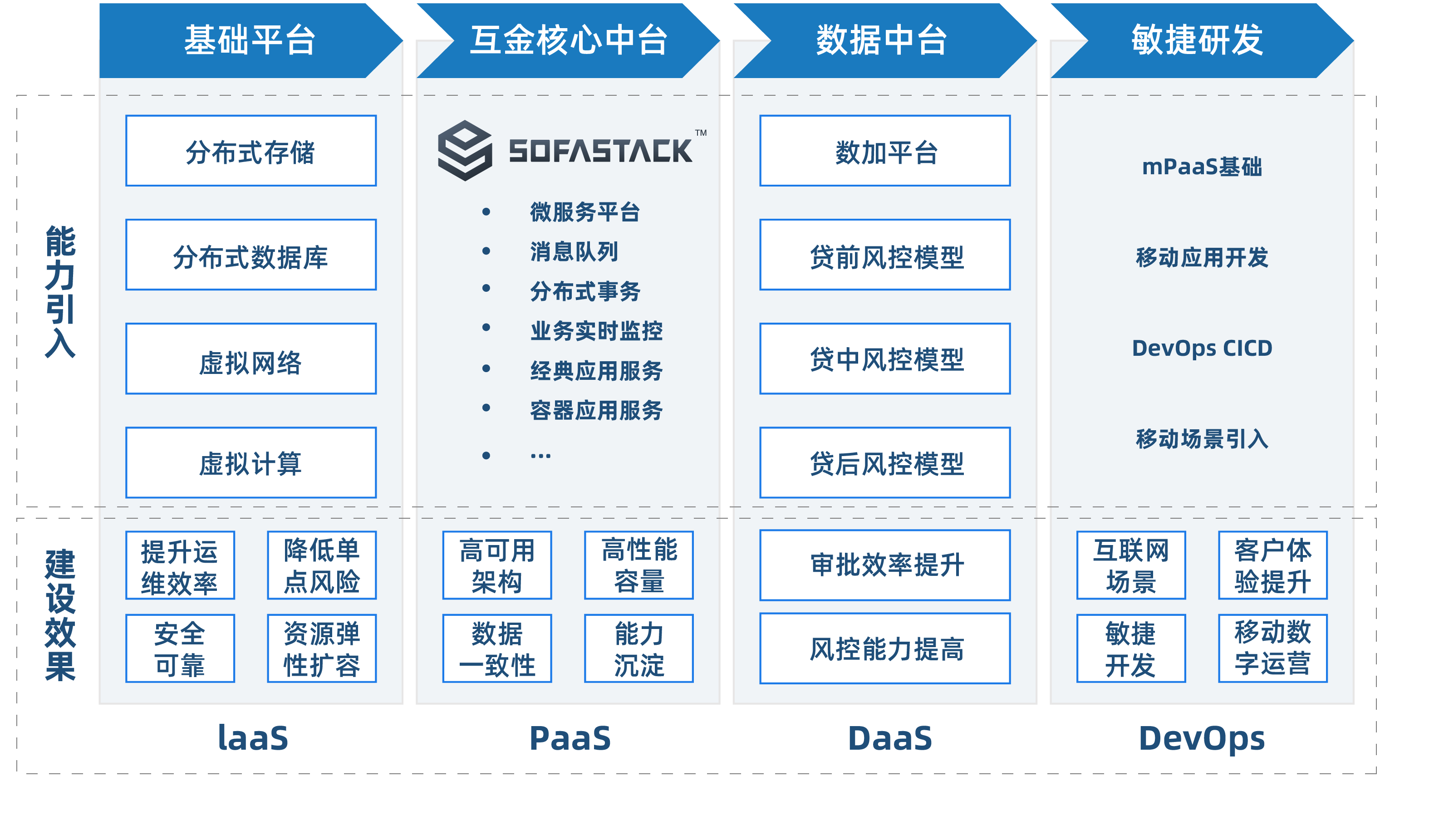
The solution uses Alibaba's Apsara cloud computing operating system, the SOFAStack distributed middleware framework, the OceanBase distributed database platform, the bPaaS financial core suite, mPaaS, a financial data intelligence platform, and Mobile PaaS. These technologies helped the bank build a financial-grade, fully distributed architecture that spans from the underlying Internet Data Center (IDC) to upper-layer mobile applications. This architecture provides a solid technical foundation for migrating core business workloads to the cloud in a compliant manner.
Customer value
Transformation: Accelerate the company's digital transformation while ensuring security in production. The bank cost-effectively migrated its core business systems to the cloud and built an autonomous, controllable cloud platform architecture.
Innovation: Unify business capability planning across the bank to break down information silos. This improves the efficiency of product innovation, service quality, and the overall customer experience.
Efficiency: Use containers and related technologies to improve release efficiency and mitigate release risks. This allows the bank to fully leverage the technical benefits of a cloud-native architecture.
Security: Build a high availability (HA) disaster recovery architecture on a cloud-native foundation. This architecture supports an intra-city active-active deployment, which reduces single points of failure and improves threat prevention and control.