Purchase and activation for new users
This document describes how to activate Information Query Service (IQS), obtain a trial package, and upgrade to the official version.
Activate the service
Go to the IQS official website or the Alibaba Cloud Information Query Service product details page.
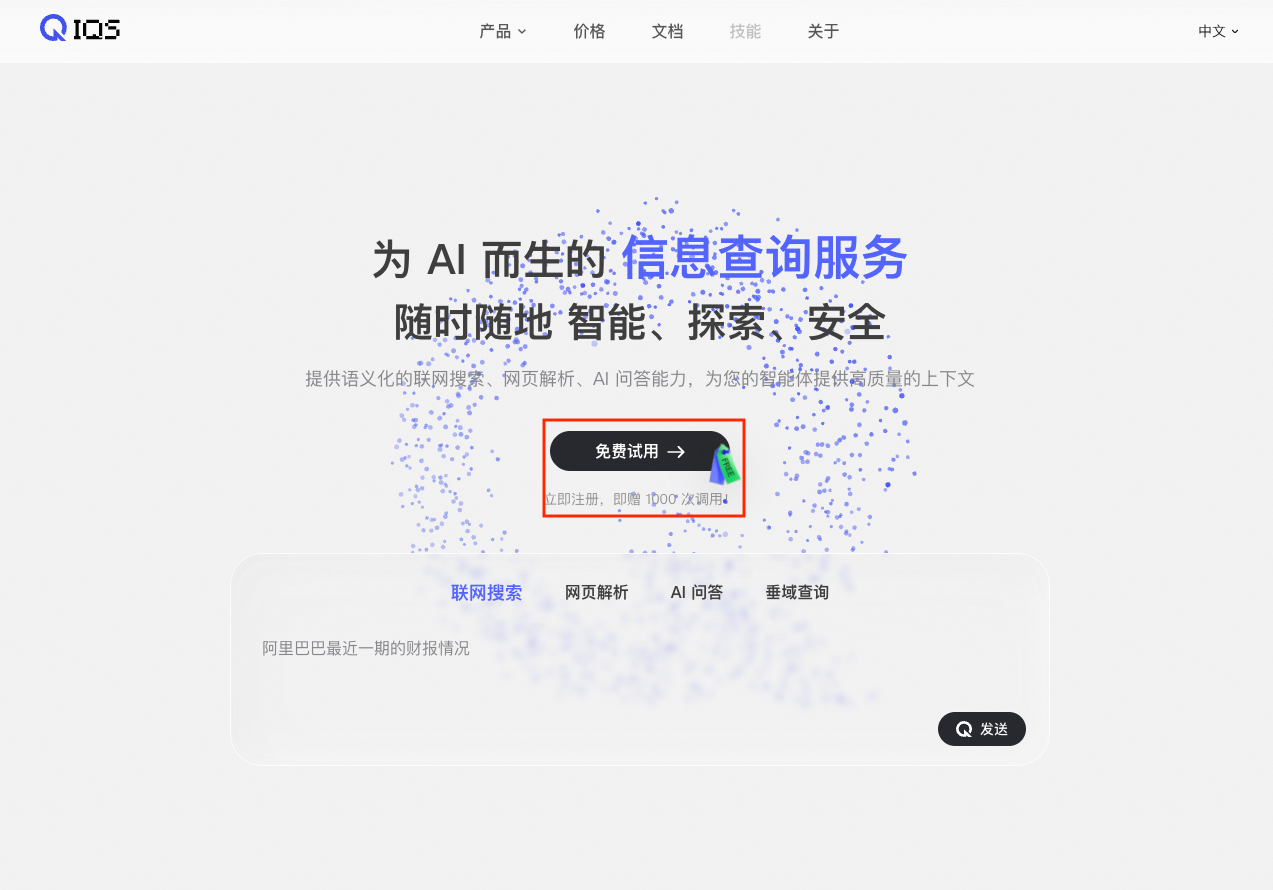
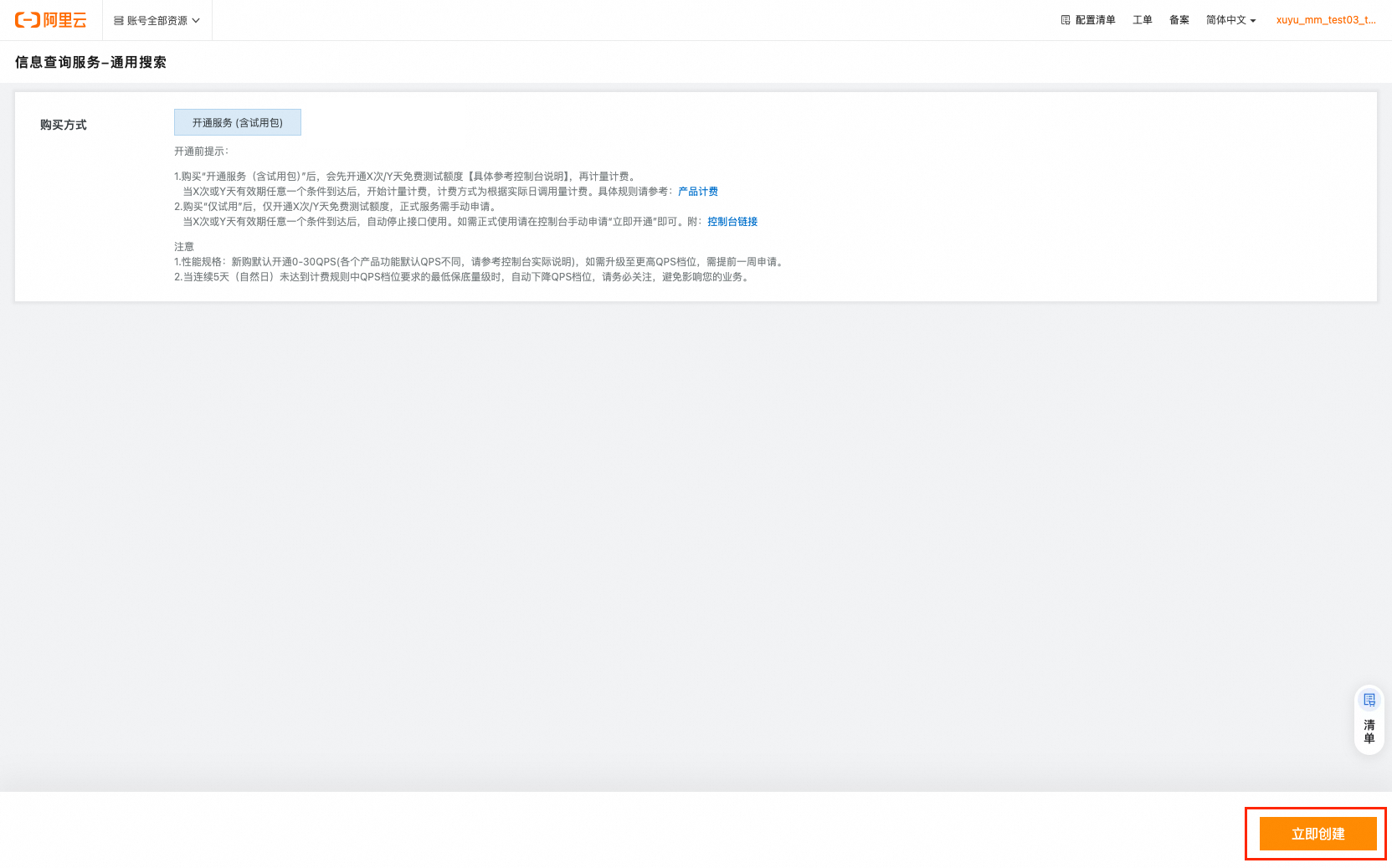
Click Free Trial or Buy Now. On the new user activation page, click Create Now in the lower-right corner.
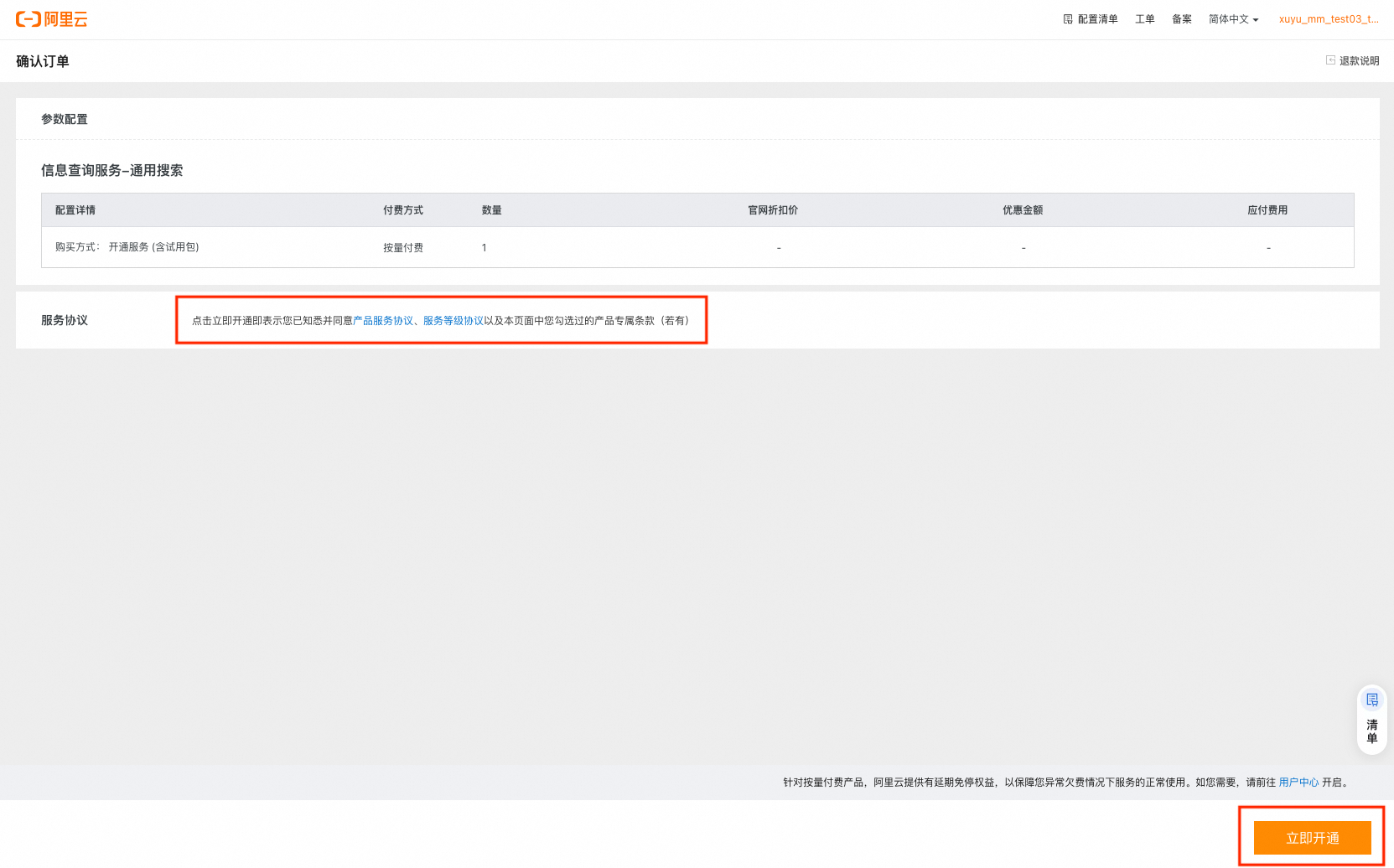
Review the Product Service Agreement and the Service Level Agreement, then click Enable Now in the lower-right corner.
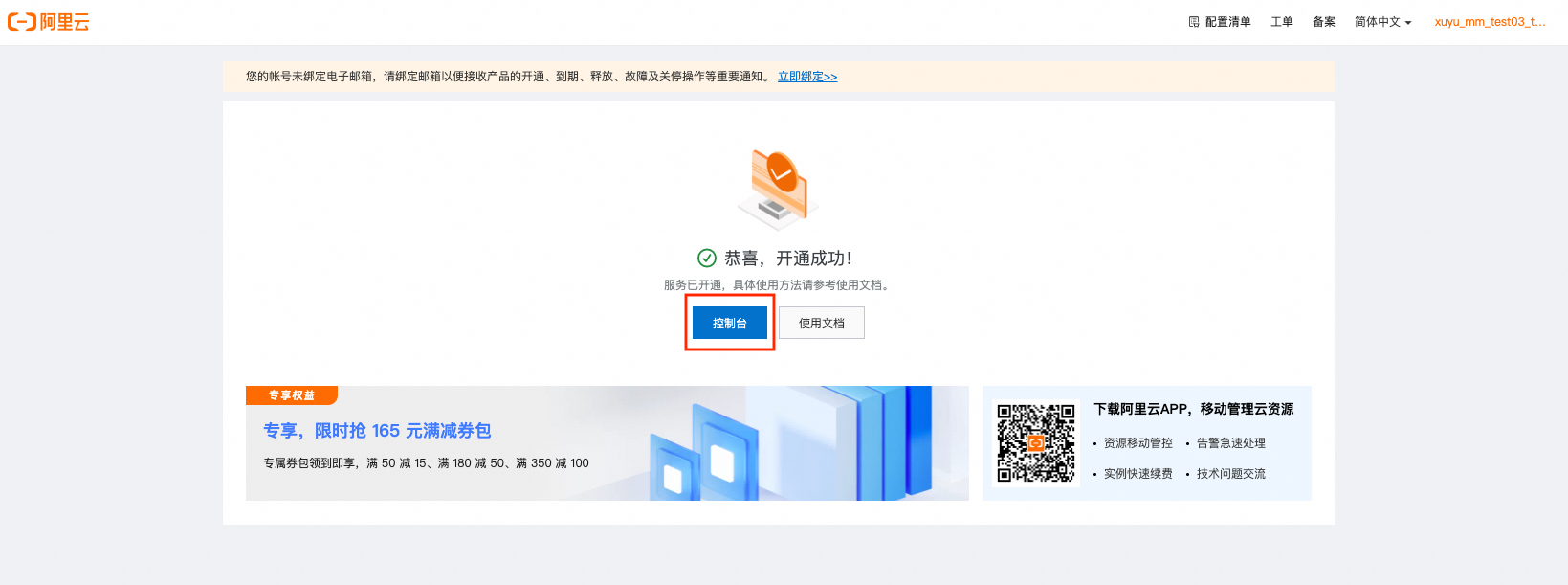
The activation is complete.
Each account can activate only one instance. If you need to make changes, please contact us.
Free trial and upgrade
After activation, open the IQS console by clicking the link on the purchase confirmation page or navigating directly to its URL.
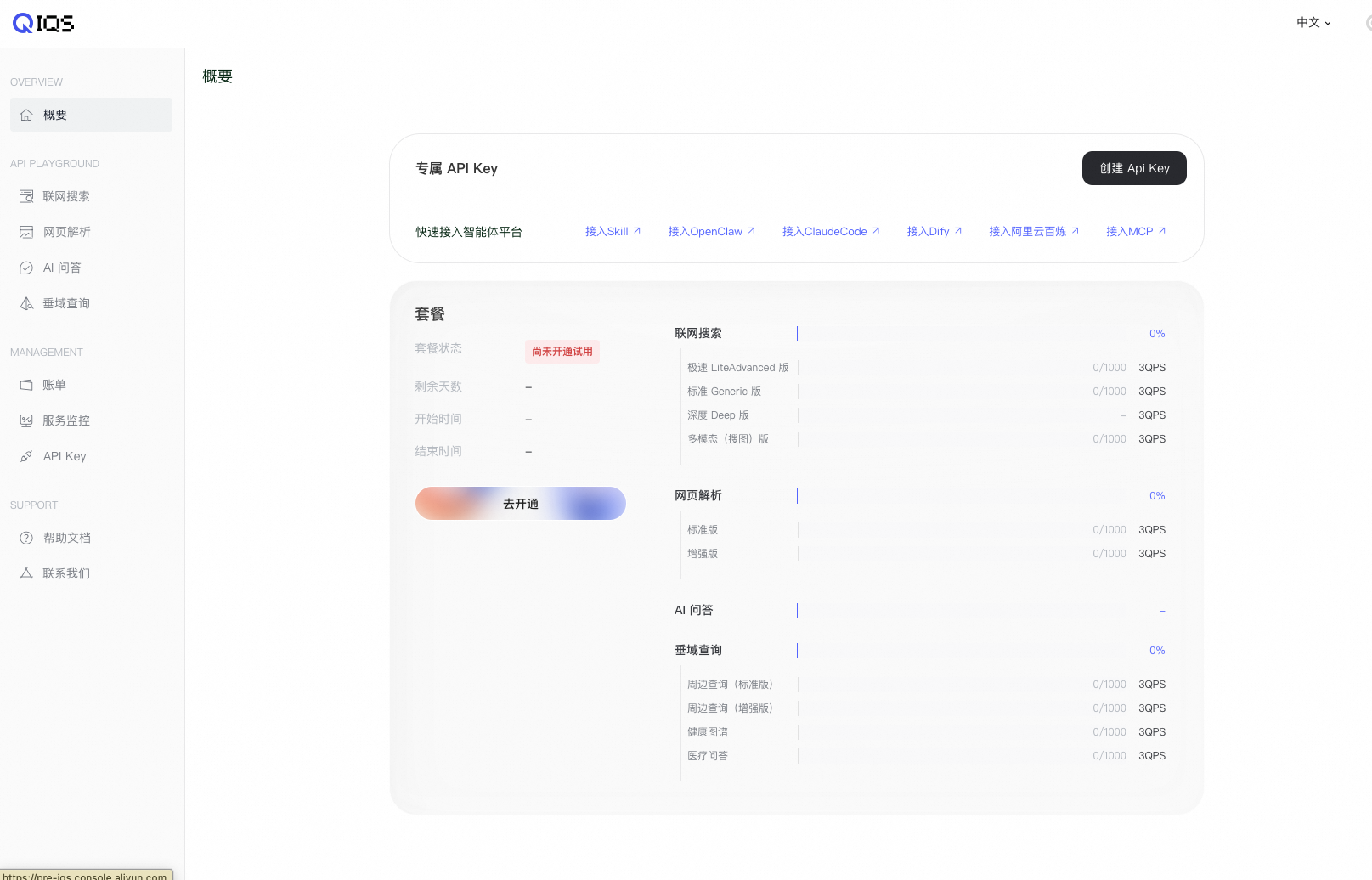
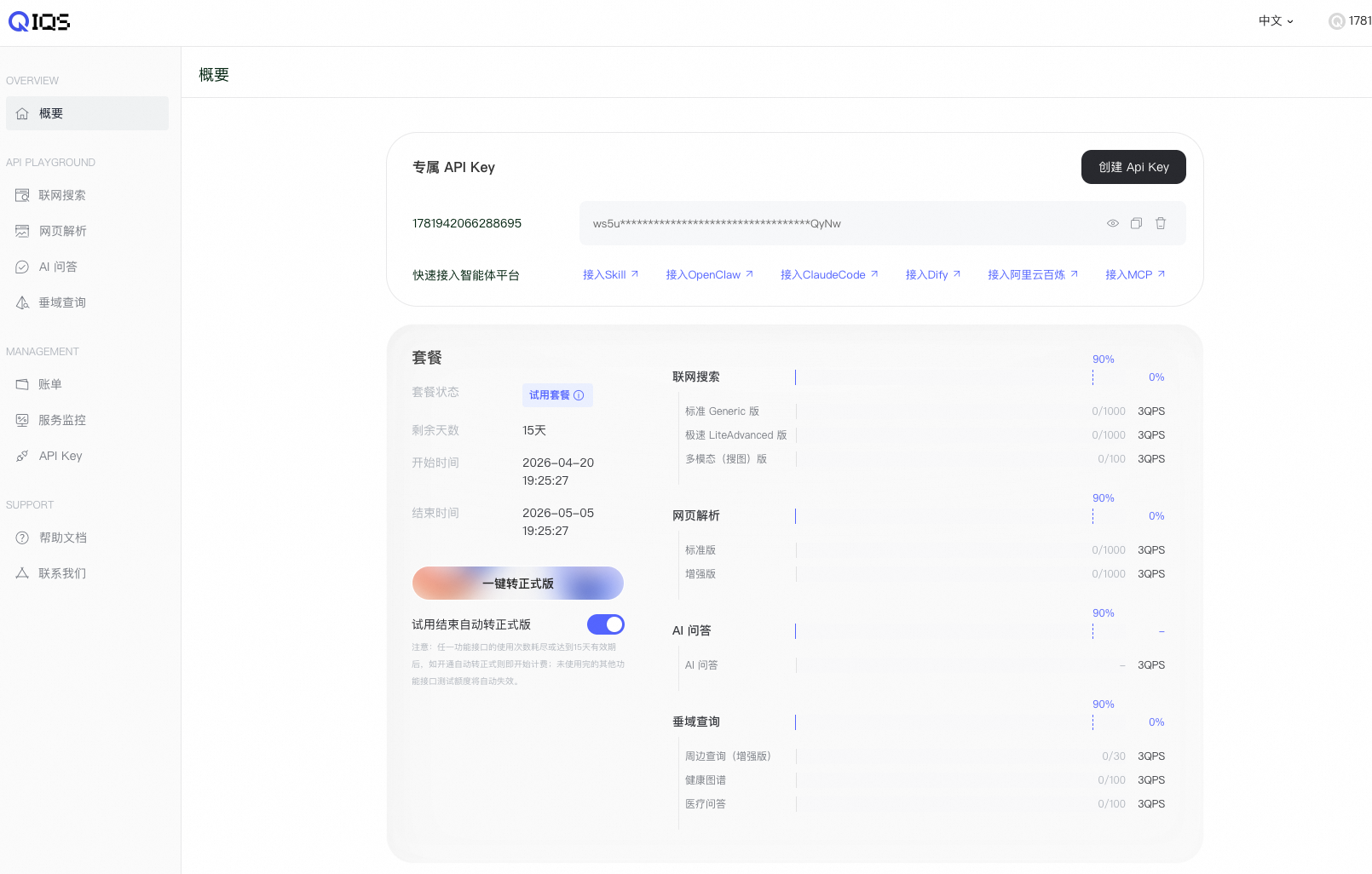
Check the activation status: In the left-side navigation pane of the console, click Overview to check the Activation Status and Edition Status. The status should be Trial Package (figure b). If it shows a red Trial not activated label (figure a), click the Activate button and repeat the activation process.
Not activated
Trial Package (Free Trial)

Check service status and call volume: After the trial package is activated, the trial APIs are enabled automatically. You can start making API calls after about 5 minutes, for example, to the Web Search API. The trial provides a fixed number of free calls for a limited time. You can view the specific Expiration Time and Number of Calls in the IQS console.
ImportantTrial limits: All trial APIs are limited to 5 QPS. The trial is valid for 15 days. Enterprise accounts receive a total of 5,000 calls, while individual accounts receive 1,000 calls. Monitor your usage and expiration date in the IQS console.
Upgrade to the official version: Your account automatically upgrades to the Official Version under any of the following conditions: you exhaust the call quota for any API, the 15-day trial period ends, or you click Upgrade to Official Version on the Overview page. Once upgraded, metering and billing will begin, and any remaining trial quota for other APIs will expire immediately.
WarningIf you click Upgrade to Official Version before exhausting your trial call quota or before the trial period ends, your remaining trial quotas for all features expire immediately. Your account will be upgraded to the Official Version, and metering and billing will begin for all services.
Proceed with caution.
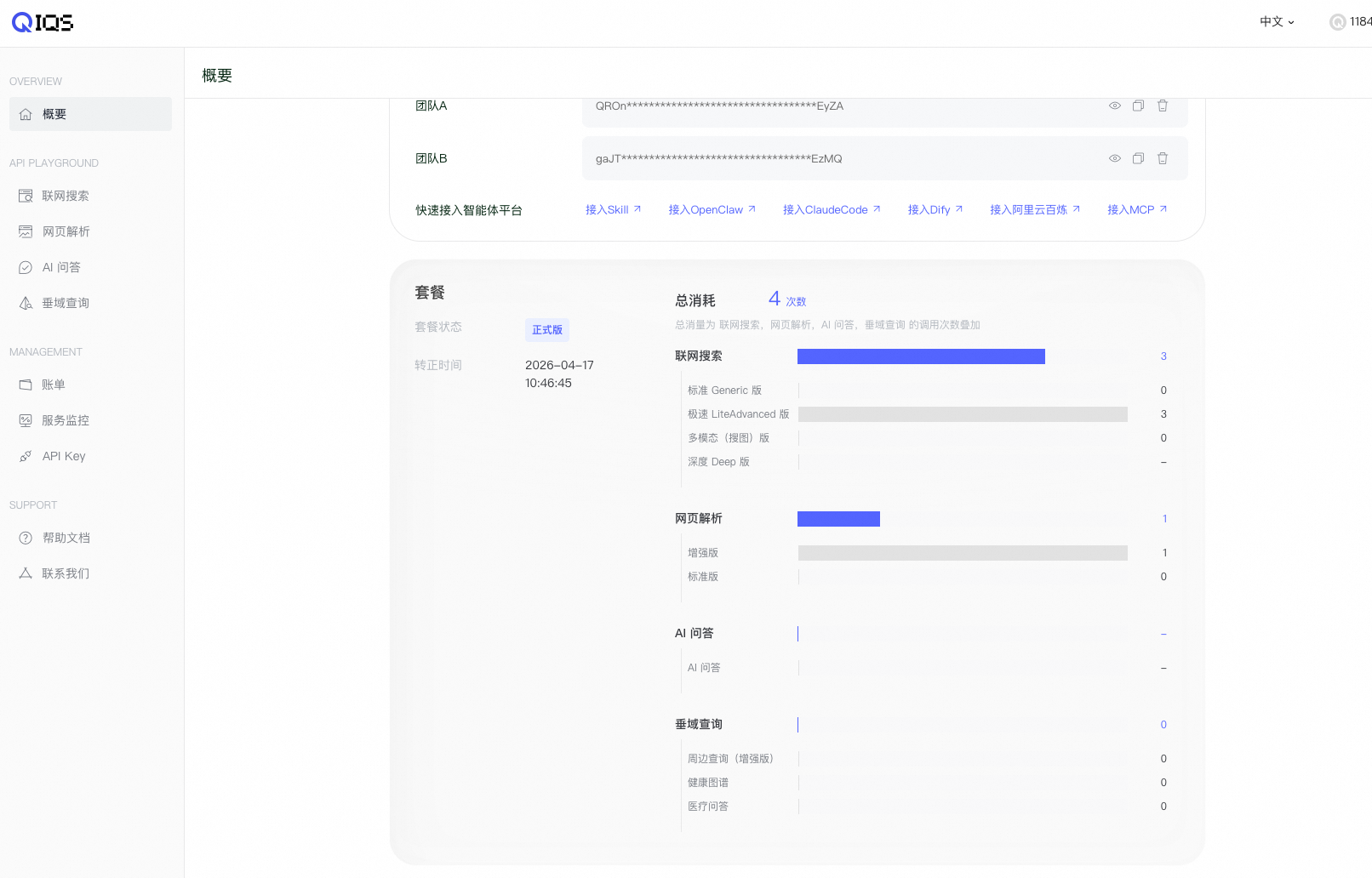
Trial vs. official version
Trial package | Official version | |
Price | Free | Paid. See Product billing rules. |
Performance limits | Default 5 QPS | Default 30 QPS. To request higher performance, submit a ticket. |
Usage limits | A total of 5,000 calls for an enterprise account (1,000 for an individual account). | None |
Validity period | 15 days | Permanent |
Feature differences | All features | All features |
FAQ
Enterprise accounts must create a RAM user and an AccessKey.
Create and authorize a RAM user
If you encounter any issues, contact us.