Infrastructure automation
The demand for speed is increasing across the board, from application release cycles and customer service to fault management and internal support. All these processes depend on the underlying infrastructure. Infrastructure automation does more than just accelerate infrastructure provisioning. It also accelerates business application processes, business transformation, and your ability to explore new opportunities.
Automation offers several key advantages:
Higher productivity: Automation handles repetitive work, which allows employees to focus on high-impact business tasks.
Greater reliability: Less manual intervention reduces the potential for errors. All identical workflows run the same way. This lets you know exactly when a job starts and how long it runs, and it ensures a predictable outcome.
Easier governance: As more people become involved, information gaps can widen, which increases collaboration costs and makes governance more difficult. Writing everything as code provides better control.
A key advantage of cloud services over traditional data centers is that they expose underlying compute, network, storage, and application capabilities through OpenAPI. This allows customers to use code to define and build advanced capabilities, which simplifies services. The result is full lifecycle automation, from resource management to application delivery.
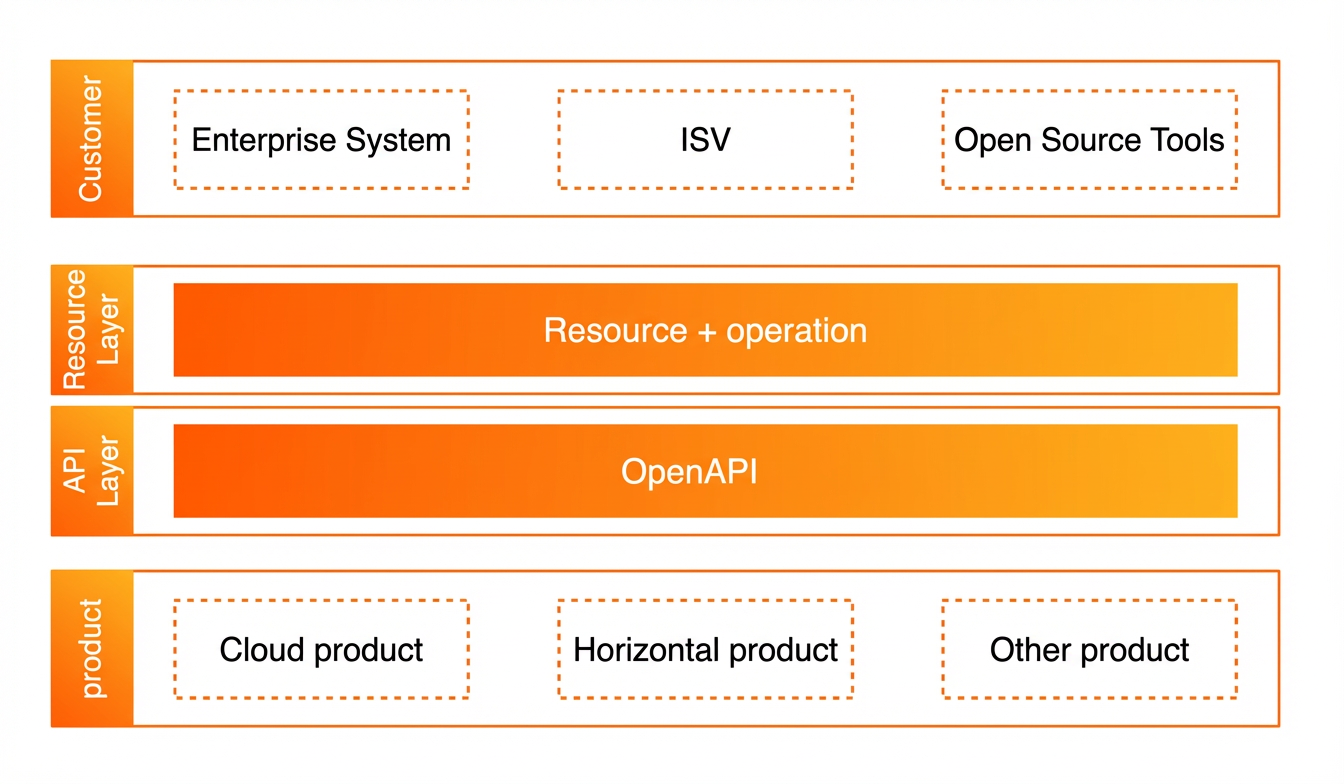
OpenAPI orchestration lets you easily combine different types of automation. For effective resource management, your enterprise systems must be tightly integrated with the cloud platform. Common types of cloud automation fall into three categories:
Infrastructure as Code: This concept uses programmable infrastructure to automate resource configuration efficiently. A typical product is Resource Orchestration Service (ROS).
Pipeline as Code: This approach uses scripts and engines to connect tasks across one or more nodes to create complex release workflows that a single task cannot complete. A typical product is Operation Orchestration Service (OOS).
Policy as Code: This uses code to automate the management of permissions and security policies. A typical product is Resource Access Management (RAM).
Alibaba Cloud also supports Terraform. In addition to installing it locally, you can use the pre-installed Terraform components in Cloud Shell.
Infrastructure automation requires new skills from operations management teams and raises the technical bar for Operations and Maintenance (O&M) work. However, it greatly improves O&M efficiency, especially after large-scale cloud adoption. Using methods such as infrastructure as code, automation scripts, and API-based configuration, you can combine the agility of the cloud with software-defined capabilities. Systems replace manual work, which means O&M costs no longer grow in direct proportion to the resource count.