Ticker Board
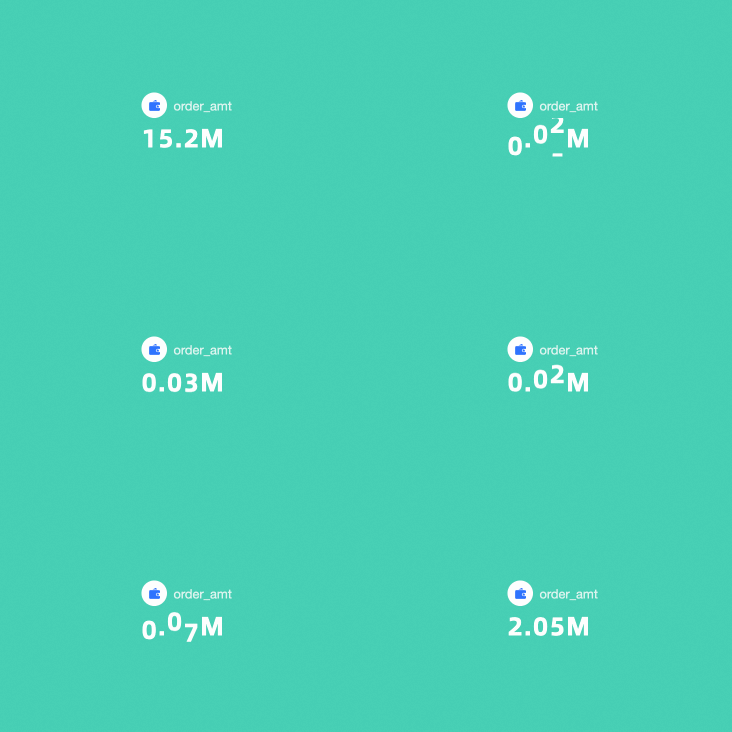
A Ticker Board is an indicator-based visualization component in Quick BI designed to dynamically display a single, core Key Performance Indicator (KPI). It highlights a key business or operational indicator with an animated flipping value that draws attention, helping users quickly assess performance and identify anomalies.
Overview
Use cases
A Ticker Board is typically used to display a single indicator, emphasizing a key business or operational metric. Changes in the indicator's value help you quickly identify potential business anomalies.
Features
Calculation capabilities: Configure advanced calculations, such as year-over-year and month-over-month comparisons, with a single click.
Visual effects: Display logos and customize backgrounds, font sizes, and colors.
Annotation capabilities: Add custom text or indicator-based notes. You can also define external links to link your data with other systems.
Example
Limitations
Prerequisites: You have created a dashboard. For more information, see Create a dashboard.
This feature is available only for Workspaces in the Advanced and Professional Editions.
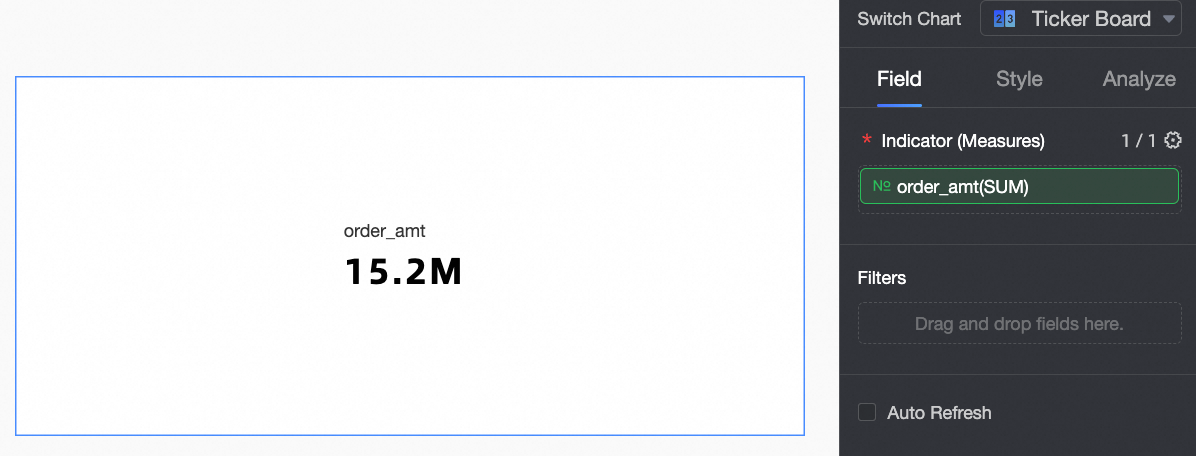
When adding data to a Ticker Board, you can select only one measure for the Indicator (Measures) field.
Procedure
Configure data
In the Measures list, find the Order Amount field. Double-click or drag the field to the Indicator (Measures) area.
Click Update.
Configure styles
This section describes the style settings for the chart. For general style settings, see Configure the chart title area.
You can enter a keyword in the search box at the top of the configuration pane to quickly find a setting. You can also click the  icon on the right to expand or collapse all categories.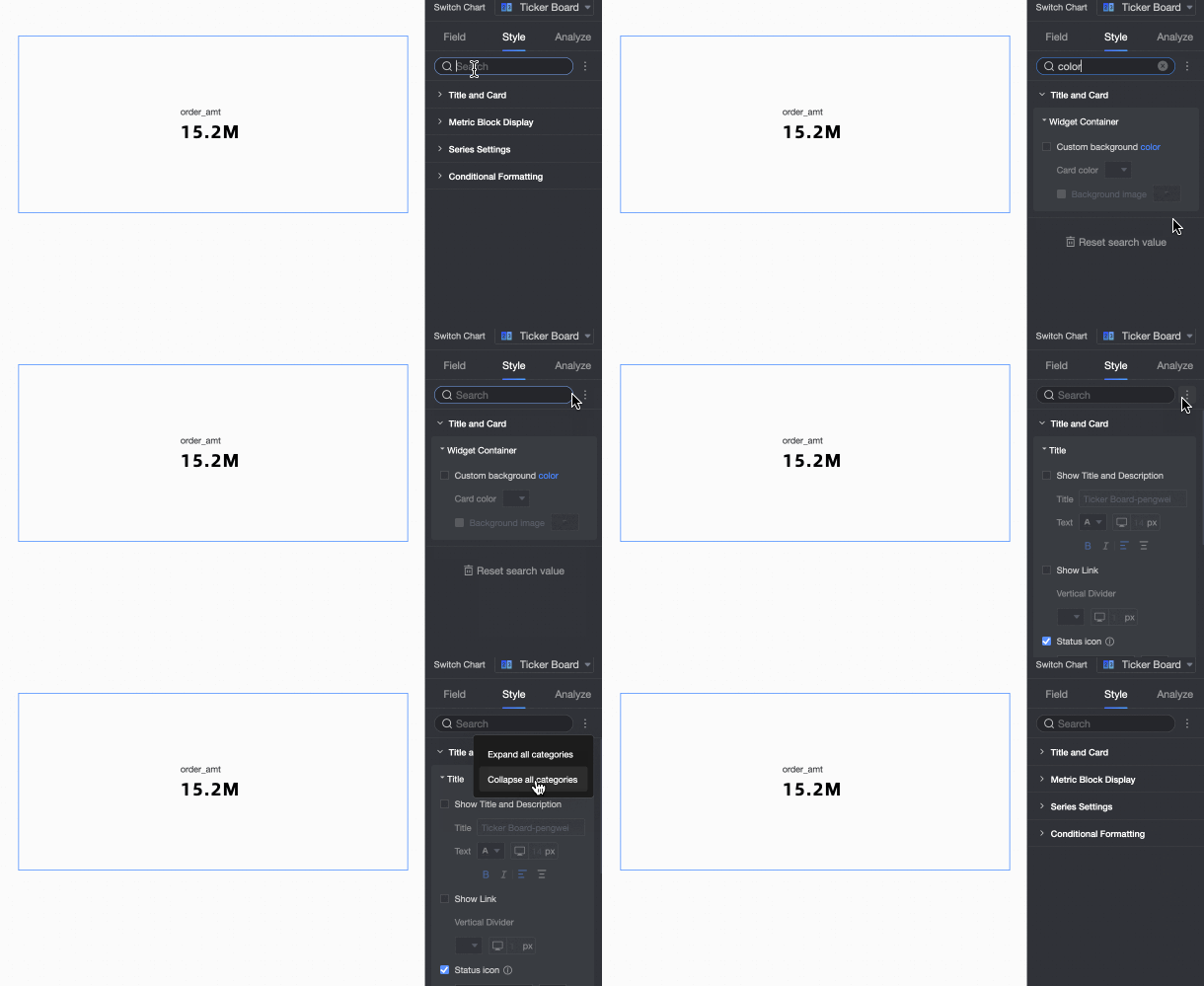
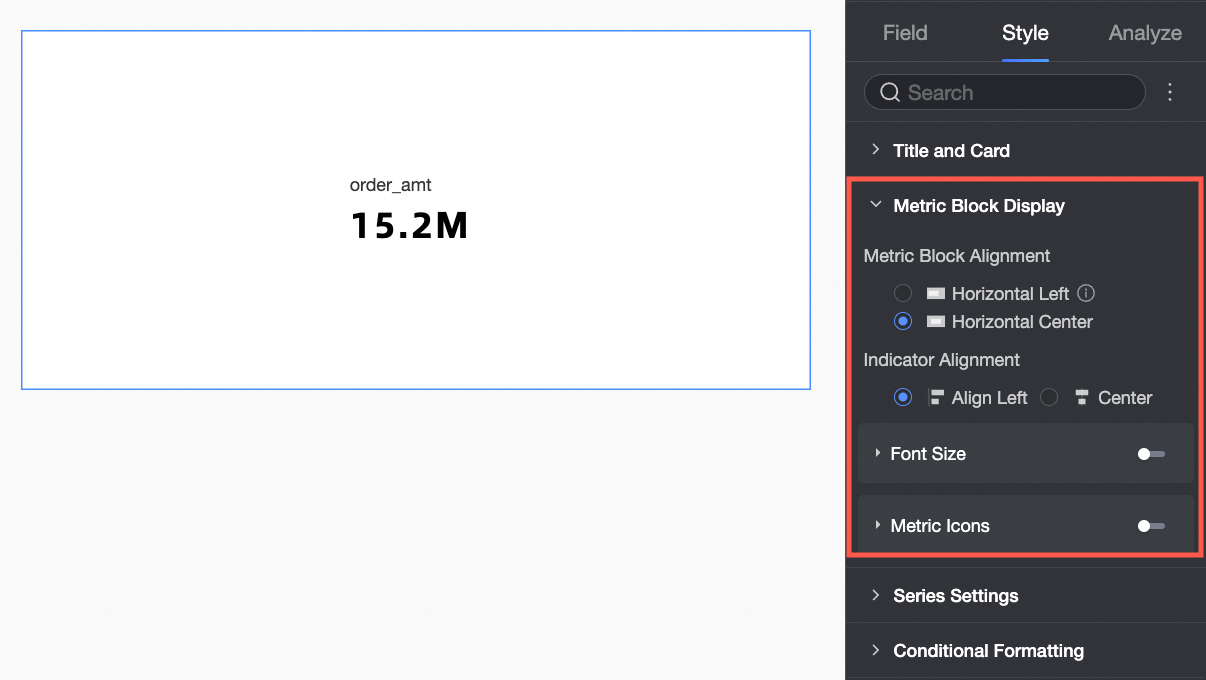
In the Indicator Content section, configure the indicator's display style.
Parameter
Description
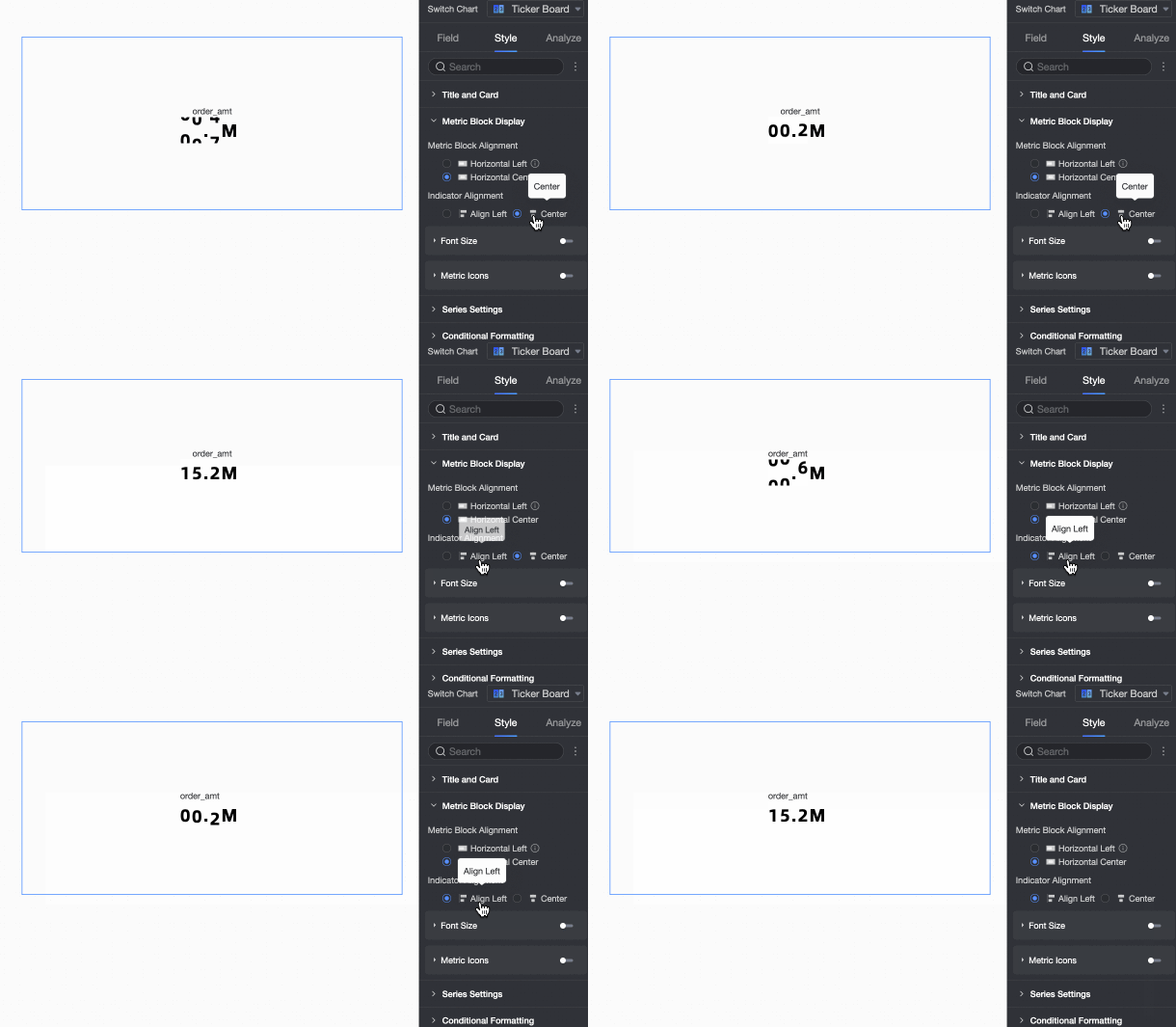
Position in indicator block
Set the position to Left or Center.
Alignment with indicator
Sets the alignment of the indicator name relative to its value. Options include Left and Center.

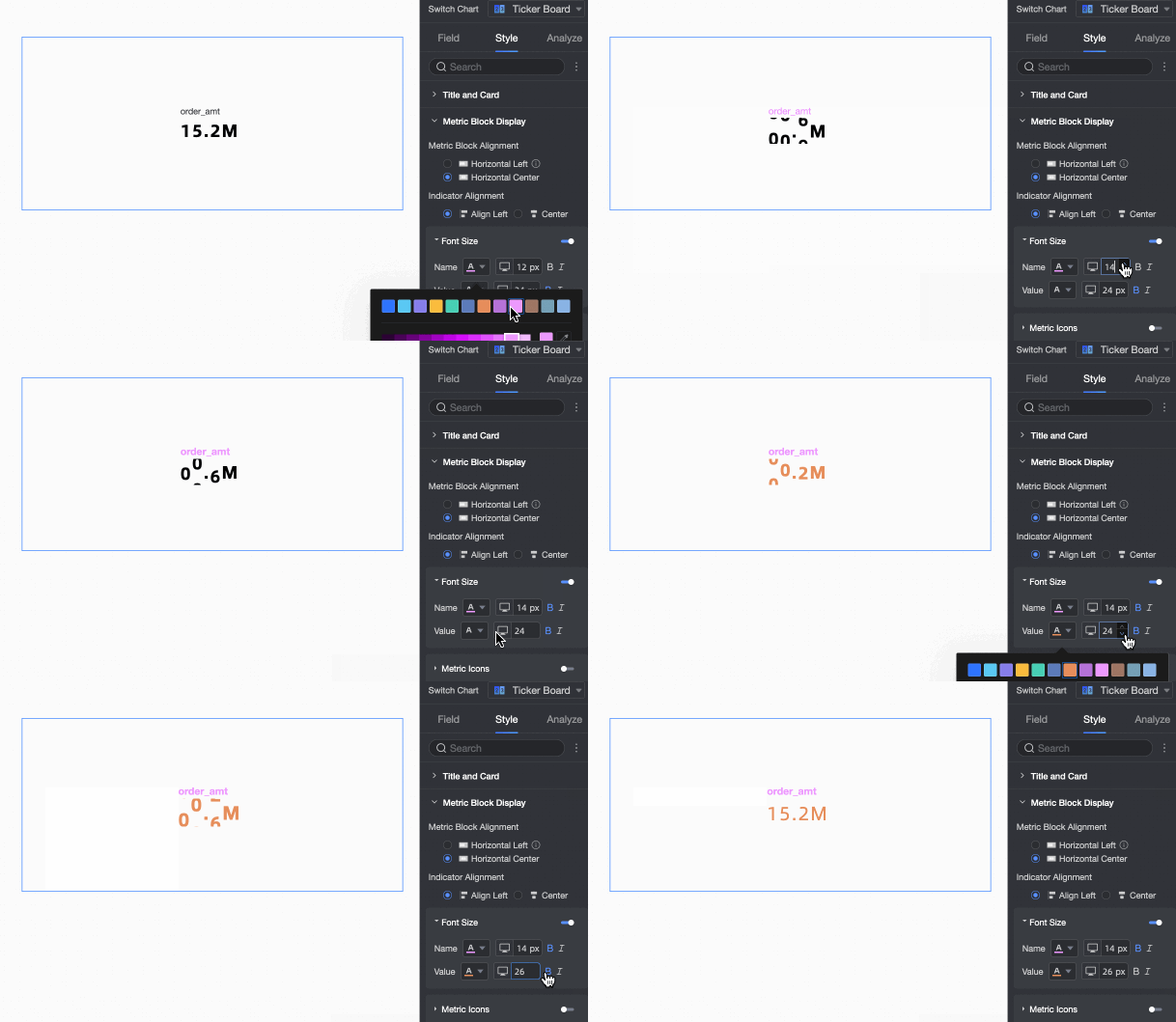
Font size settings
Enable this option to customize the font style for the indicator name and value.
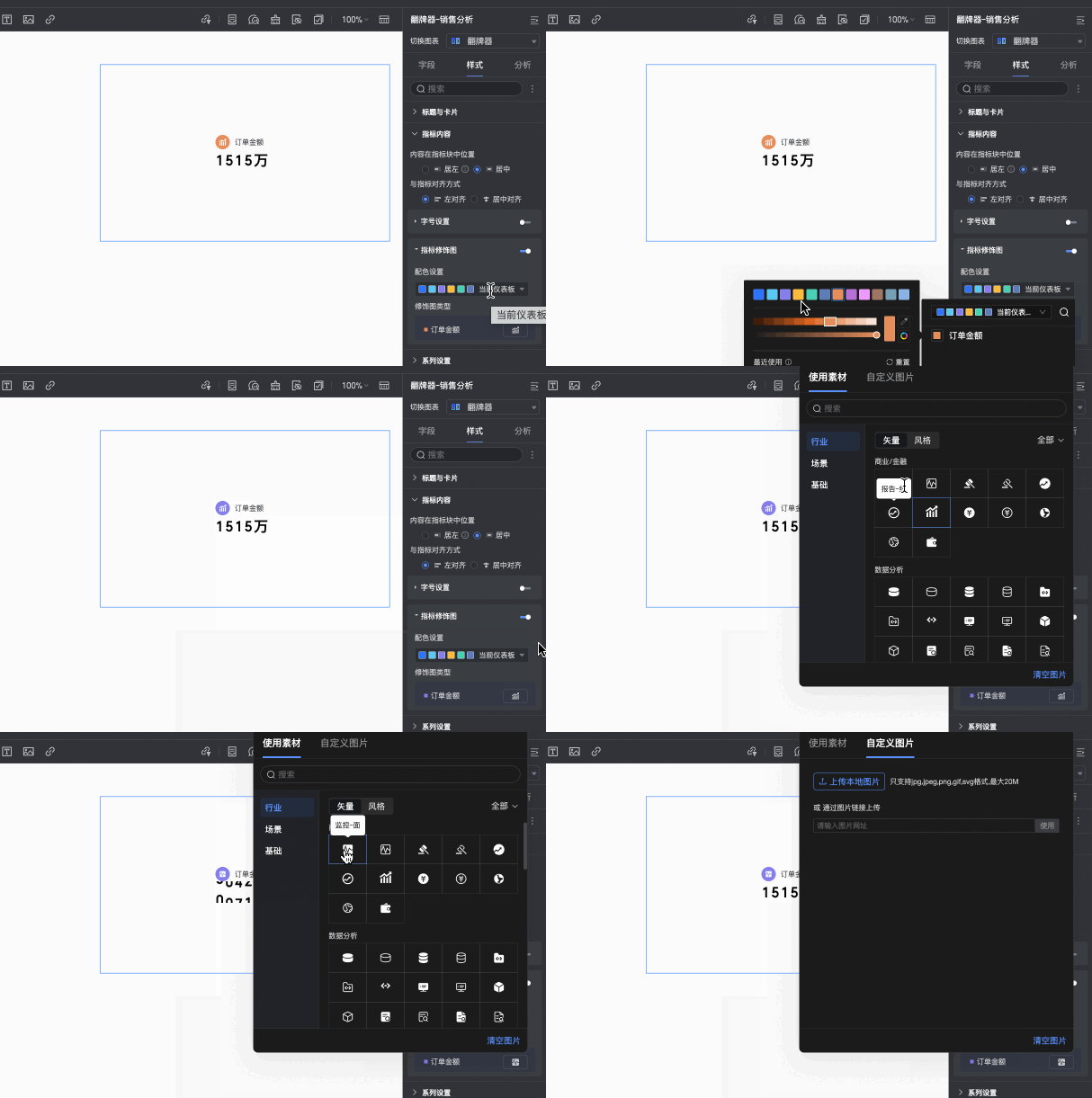
Indicator icon
Enable this option to display an icon before the indicator and configure its style.
You can also upload a local image file as a custom icon.
NoteThe image must be in JPG, JPEG, PNG, GIF, or SVG format and no larger than 1 MB.
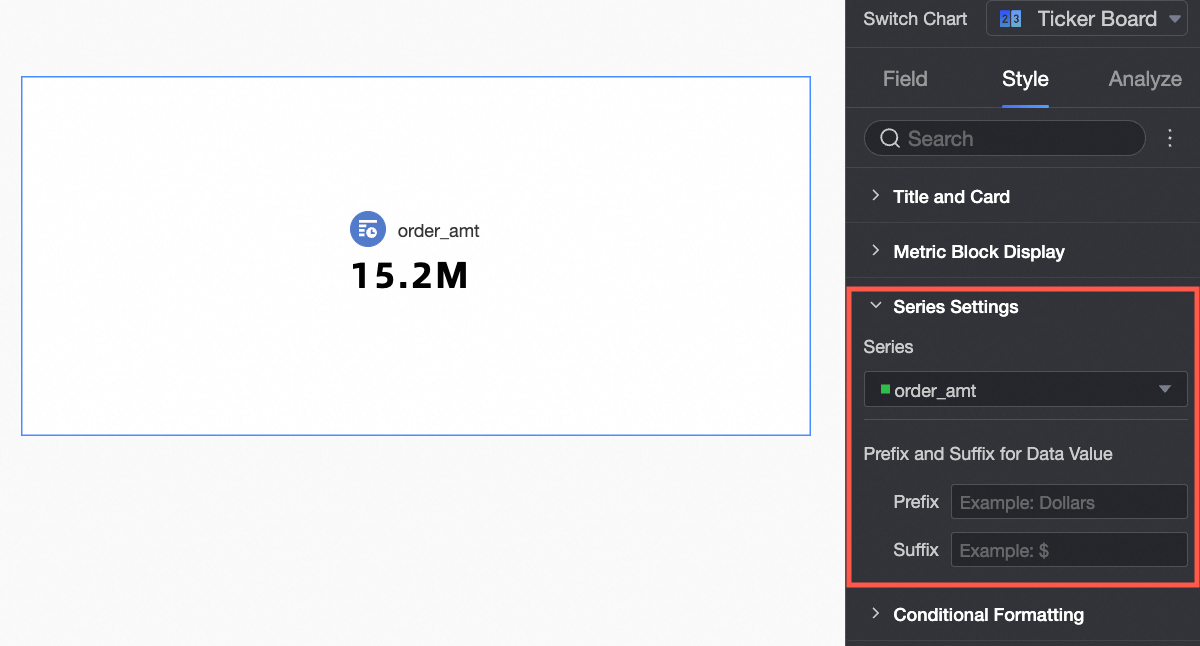
In the series settings section, configure Select Series and the prefix and suffix for indicator value.
Parameter
Description
Select Series
Select the measure that you added to the Indicator (Measures) field.
Prefix and suffix for indicator value
Set a prefix and a suffix for the indicator value on the chart.
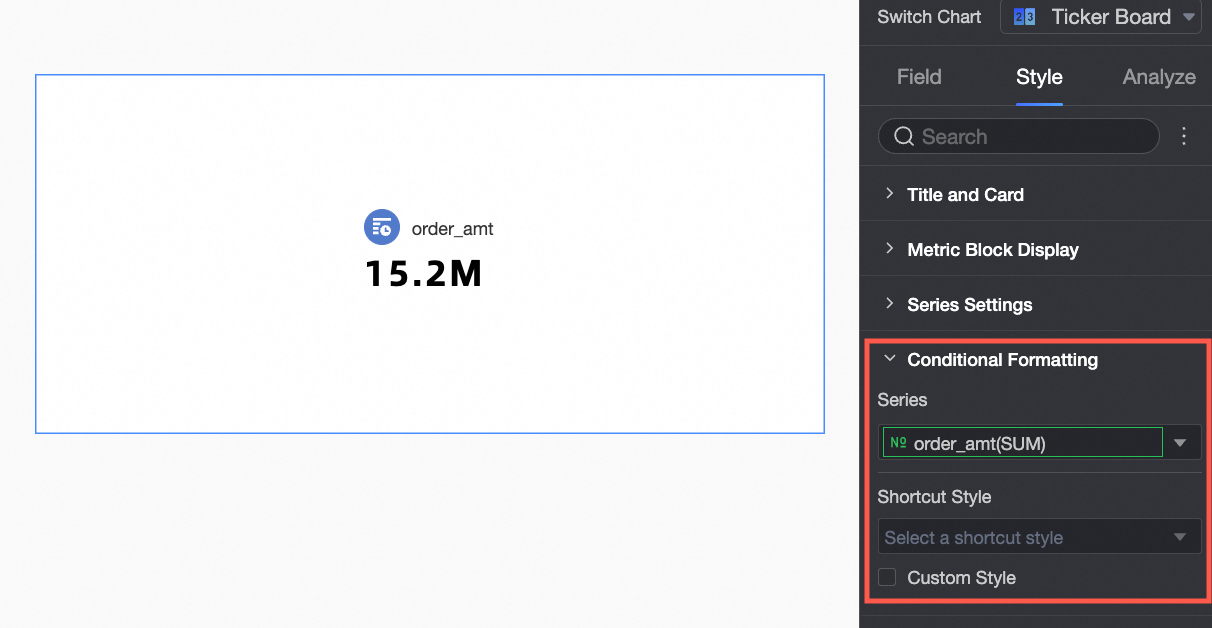
In the conditional formatting section, configure rules for the measure data.
Parameter
Description
Select Field
Select the measure field for which you want to configure conditional formatting. You can select any measure added to the Indicator (Measures) field.
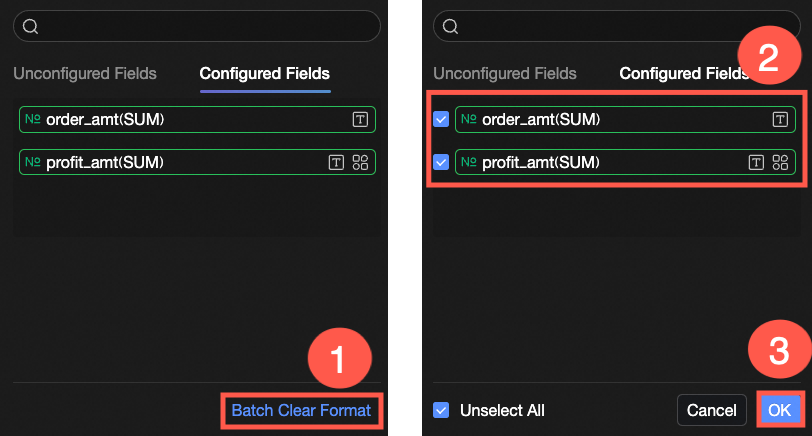
After you configure the styles, if you no longer need the conditional formatting, you can click Batch Clear Formats at the bottom right of the field pane. In the list that appears, select the formats to remove and click OK.
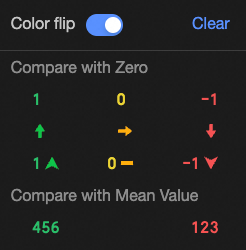
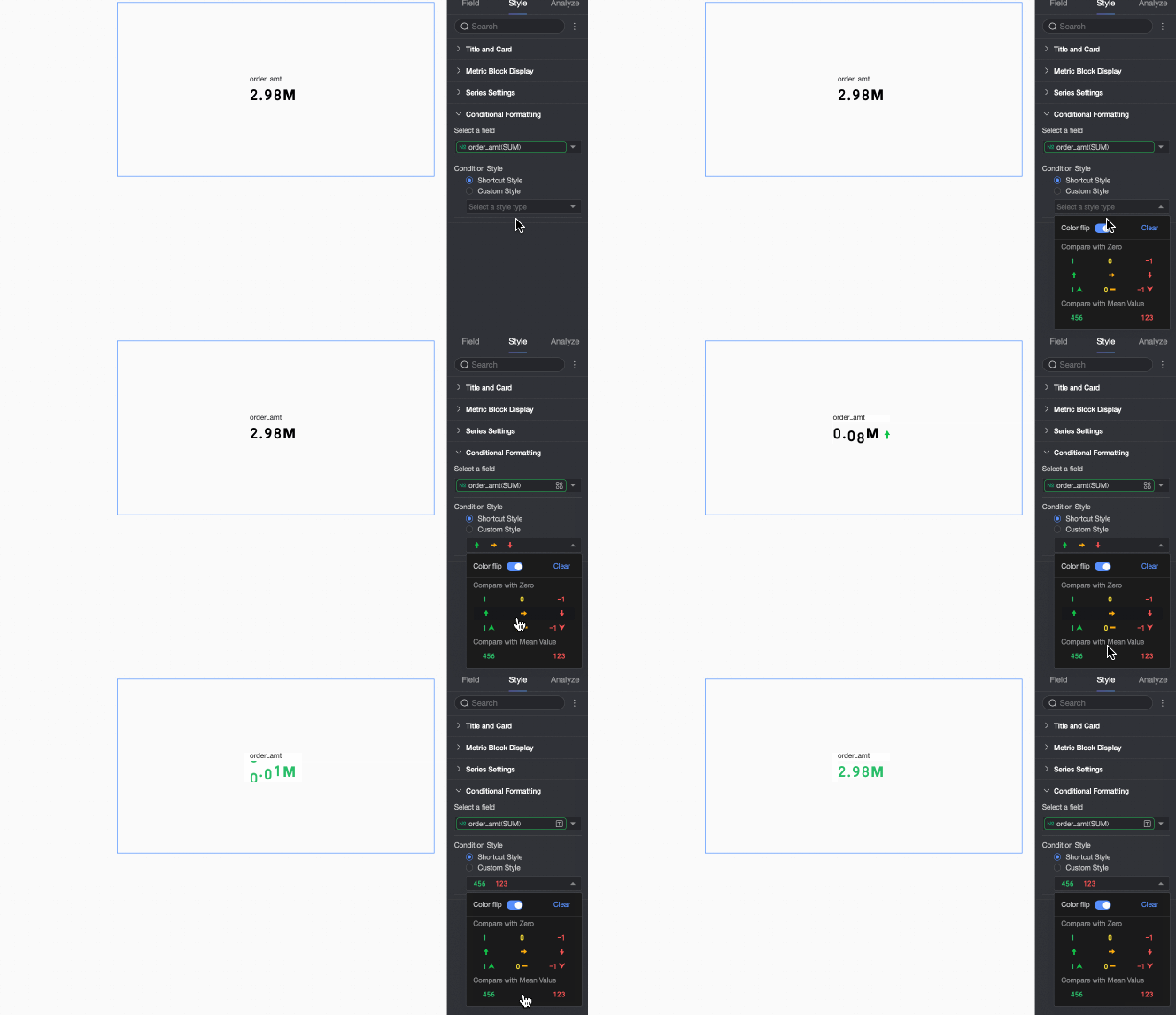
Quick Styles
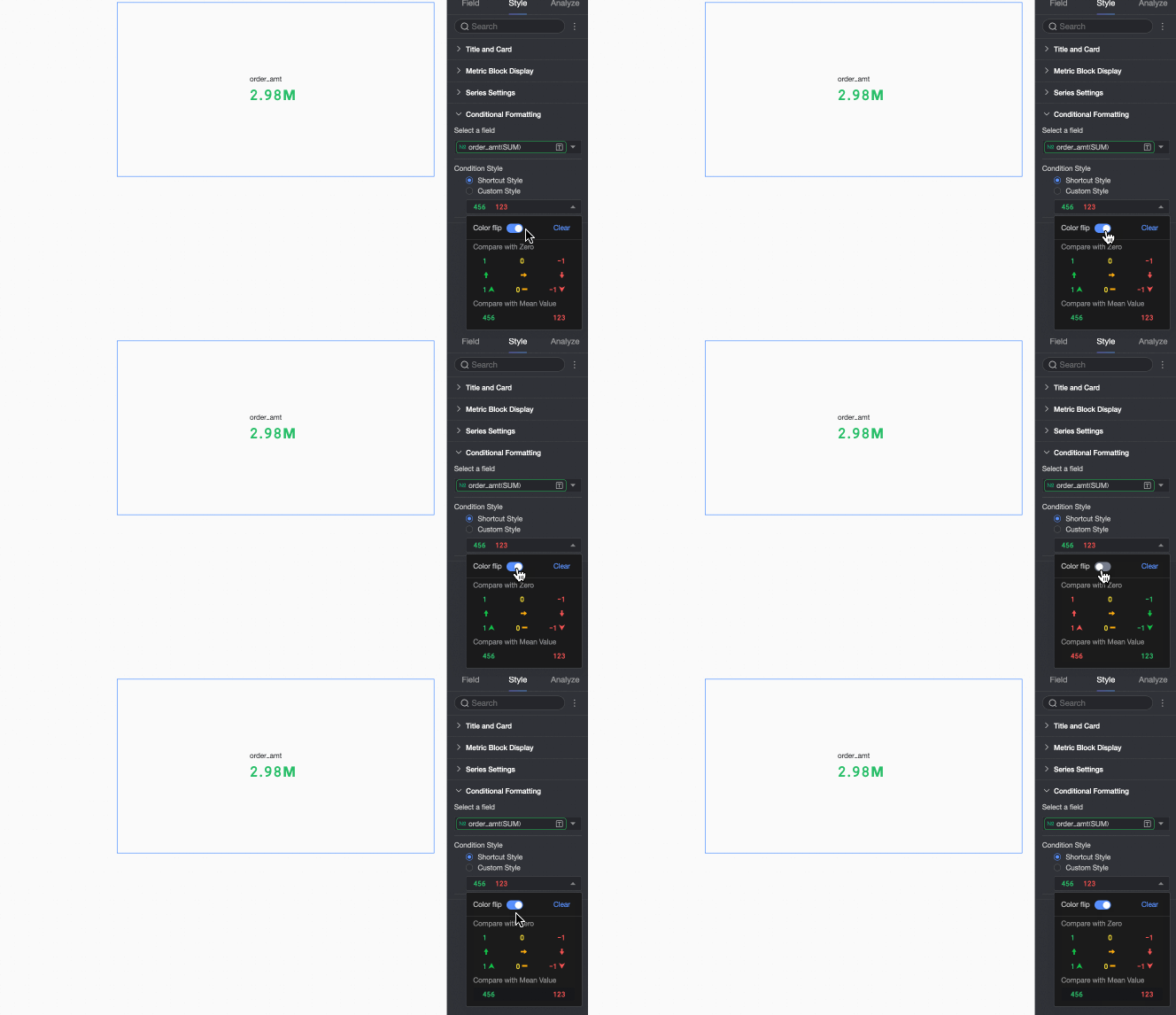
Set a tag icon or font color for the current measure field from a list of built-in styles.
Comparison: You can choose to compare with 0 or compare with the average value.
Invert Colors: For example, when comparing with 0, values less than 0 are red and values greater than 0 are green by default. Inverting the colors reverses this, making values less than 0 green and values greater than 0 red.
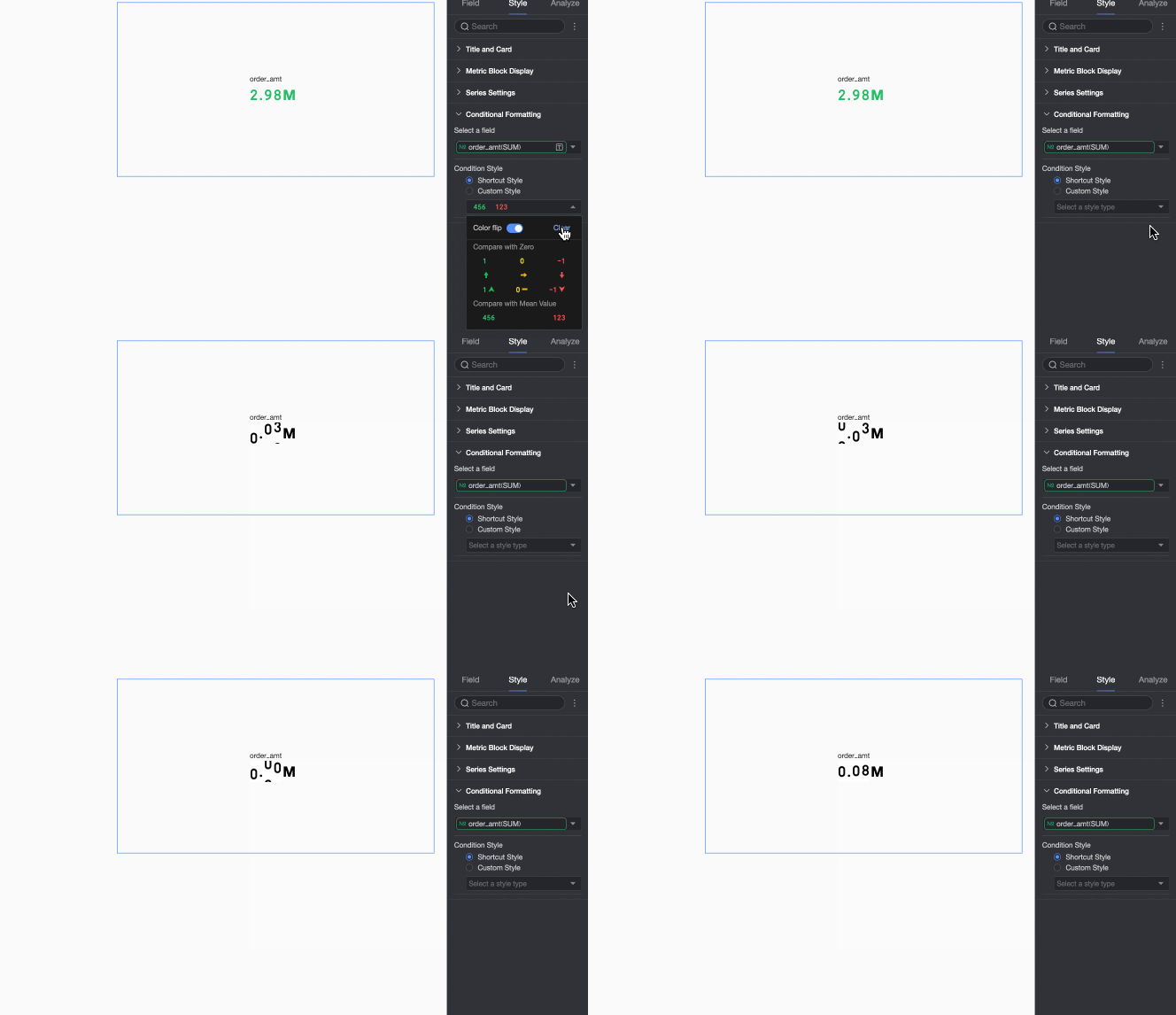
Clear: If a quick style is no longer needed, click Clear to remove it.
Custom style
In addition to the quick styles, you can configure a custom style for the current measure field.
Text: Configure rules to highlight the field value with a specific text color to visually emphasize key data.
Configure the following settings.Condition Type: Set the comparison basis for the rule. You can set the condition to compare with a fixed value or compare with a dynamic field.
Rules: Define the logic for the rule and the text style to apply when the condition is met. You can set the font color and apply bold or italic formatting.
Add: Click to add a new rule.
Icon: Display an icon in the corresponding cell based on the result of a value comparison. This clarifies the relationship between the current data and the target data.
Configure the following settings.Condition Type: Set the comparison basis for the rule. You can set the condition to compare with a fixed value or compare with a dynamic field.
Rules: Click the Tag icon selection box to choose an icon type from the built-in icon sets. Then, define the data condition for the icon. You can also select a unique icon for each comparison rule.
Add: Click to add a new rule.
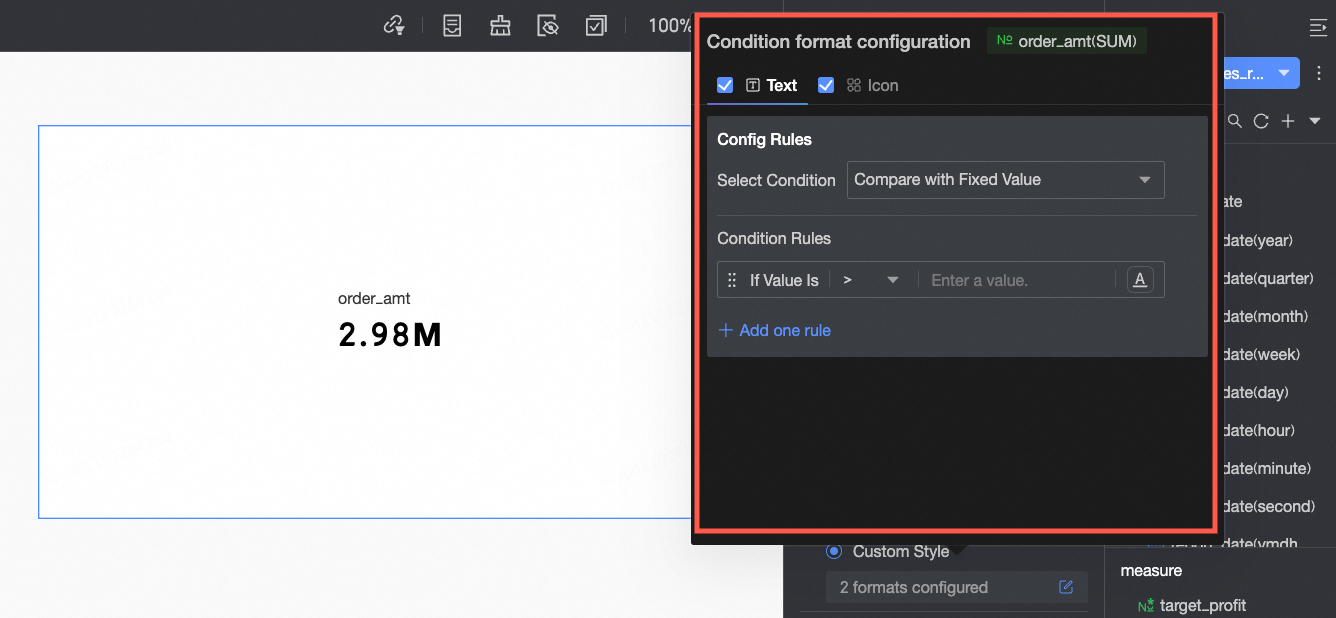 Configure the following settings.
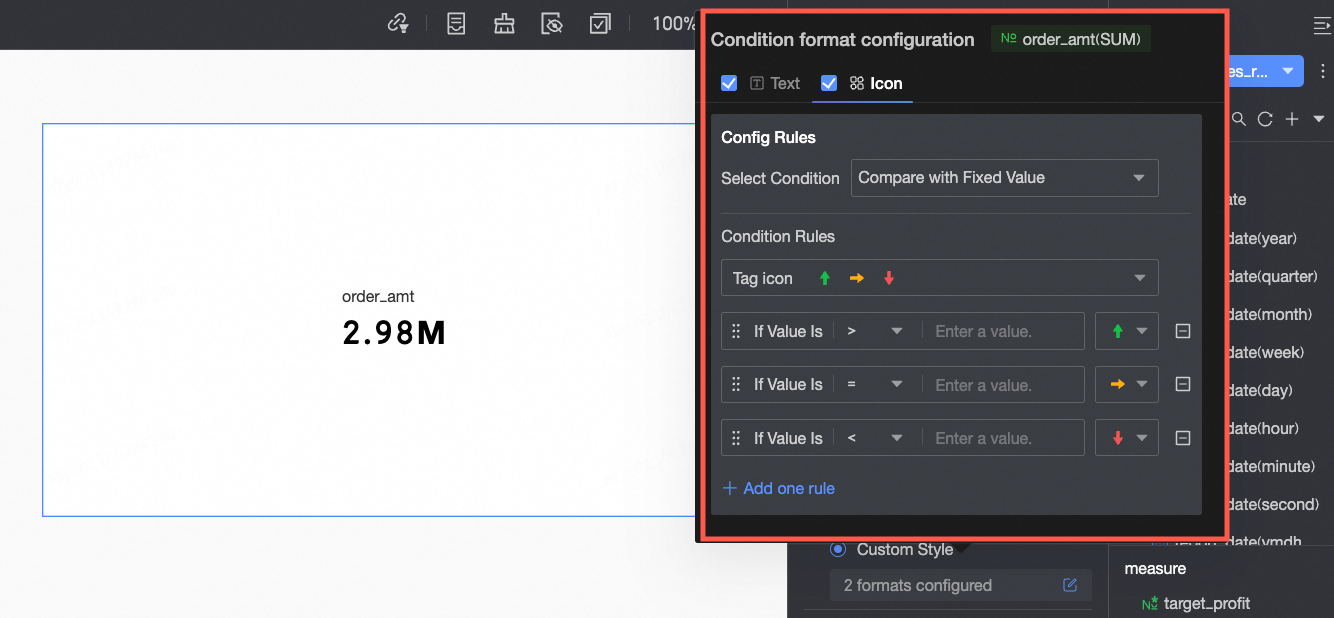 Configure the following settings.
Next steps
You can share the dashboard with specific users. For more information, see Share a dashboard.
To create a complex dashboard with a navigation menu for thematic analysis, you can integrate your dashboard into a data portal. For more information, see Create a data portal for PC.
FAQ
1. What is the main difference between a Ticker Board and an Indicator Card?
A: The main difference is the number of indicators they can display. A Ticker Board is designed to show only one core indicator and uses a dynamic effect to emphasize the number. An Indicator Card can display one or more indicators and typically groups them by a dimension, such as showing sales and profit by region.
2. Can I show sales and MoM growth together?
A: A Ticker Board can only display a single measure. You cannot show the month-over-month growth rate in the same component. You must either pre-calculate the growth rate as a new measure in your dataset and use two Ticker Board components (one for sales, one for the growth rate), or use a component that supports primary and secondary indicators, such as an Indicator Card or an Indicator Trend Chart.
3. How to conditionally color a Ticker Board number?
A: You can do this by configuring conditional formatting. Go to the Style tab and open the conditional formatting section. Select the Text tab under custom style. Add a rule with the condition "When [your indicator field] > 1,000,000" and set the text color to red.